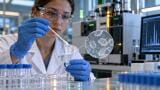
Scientists have used denaturing
high performance liquid chromatography (DHPLC) to identify a novel neurofibromatosis type 1 (NF1) mutation.
Neurofibroma creates isolated or multiple lesions and is a common autosomal dominant disorder which affects one in every 3,500 individuals.
The condition is caused by mutations in the NF1 gene, a fully penetrant gene which exhibits a mutation rate around ten times higher than other disease genes, this accounts for the high number of cases which are sporadic.
In a study published by Hereditary Cancer in Clinical Practice, the team used DHPLC on the spliced sites of the NF1 gene were investigated for mutations.
As a result, the scientists identified a novel NF1 mutation and have contributed to data for the refinement of the NF1 genotype-phenotype spectrum.
The report claimed that the findings could be used for the identification of families at risk of NF1, as the study indicates that a tendency for multiple tumours arising in the same subject, and a higher tumour burden per family, are the most observed in the NF1 mutation.





 Product directory