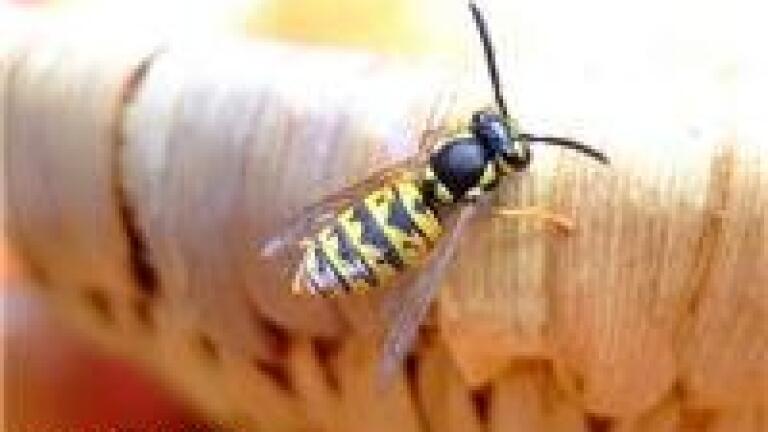
The composition of venom from the parasitic wasp Chelonus inanitus has been analysed using
liquid chromatography-mass spectrometry (LC-MS) and gel electrophoresis.
A team of scientists from French and Swiss universities put LC-MS to the test looking at over 2,000 expressed sequence tags (ESTs) and proteins within the venom.
Their findings are published in BMC Genomics, a periodical dedicated to proteomics and genome-level analysis.
Roughly three-fifths of the ESTs investigated were associated with proteins found to be present in the C inanitus venom using mass spectrometry.
According to the researchers, the remainder are likely to have translational and transcriptional functions in the wasps' venom gland cells.
Overall, the venom was found to consist of two elements - proteins which may be lineage-specific and conserved components.
The team explain that their research is important as little has previously been understood about molecular-level composition of the venomous secretions from the wasp species.




 Product directory