A
liquid chromatography-mass spectrometry (LC-MS) method was used in an investigation seeking to improve the response rate of studies into compromising behaviour.
Published in the Substance Abuse Treatment, Prevention, and Policy journal, scientists piloted a new non-randomised model to assess the prevalence of discriminating behaviour, in this case canvassing for the options and beliefs regarding Mephedrone.
Some 318 volunteers with a mean age of 22.69 in a rural area in north Wales and a metropolitan area in England completed a questionnaire containing the new fuzzy response model called 'Single Sample Count' (SSC) and established Forced Response (FR) in alternating order, with four Mephedrone-based questions.
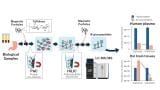
Hair samples were then screened for Mephedrone using LC-MS, with both questionnaire models yielding similar estimates – FR eliciting predictions of between 2.5 per cent and 15.0 per cent, while SSC suggested zero to 10 per cent.
The six positive hair samples meanwhile indicated that the prevalence rate in the sample was at least four per cent.
Those behind the study claim that the closeness of these estimates provides evidence to support the validity of the new SSC model.





 Product directory