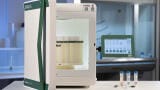
High-performance liquid chromatography (HPLC) has been used to look into the cloxacillin concentrations achieved in cow udders.
Scientists at Pfizer Animal Health in Sandwich, Kent, worked with the Institute for Pharmacology, Toxicology, and Pharmacy at the School of Veterinary Medicine in Hannover, Germany.
Their aim was to learn more about how cloxacillin penetrates the intramammary tissue of cows when used as a treatment at drying off.
Cloxacillin is known to combat infections including some resistant to penicillin, but the scientists wanted to understand its distribution throughout the cow's glandular tissue.
In order to do this, HPLC was used to look at tissue samples from both the front and rear quarters of cows who had received cloxacillin.
The front exhibited an inverse correlation between cloxacillin concentration and distance from the teat after six hours, while a less clear pattern was seen in the rear quarters.
However, the researchers discovered that all regions of the cow exhibited a minimum inhibitory concentration of cloxacillin benzathine at 0.5 micrograms per gram.
BMC Veterinary Research reports findings of studies into animal welfare across the domestic, companion and livestock markets, as well as in the wild.





 Product directory