Scientists have used
high performance liquid chromatography-mass spectroscopy (HPLC-MS) to further investigate the link between cholesterol changes and rodent scrapie.
In a study published in Lipids in Health and Disease, a team from the Department of Biomedical Science and Technology at the University of Cagliari in Italy analysed and compared cholesterol variations in extracts of ScN2a cells and in brains of scrapie-infected C57Bl/6 mice.
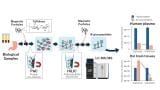
To do this, the scientists used two different methods - a fluorimetric-enzymatic cholesterol assay and HPLC-MS.
The team found that infected cells and brains showed cholesterol anomalies compared to non-infected cells, although only the HPLC-MS method highlighted statistically significant cholesterol variations, particularly in the cholesteryl esters (CE) fraction.
Oral pravastatin administration to scrapie-infected mice, was associated with a significant reduction of cerebral FC along with an attendant further increase of the CE pool.
The scientists claimed that although further studies are needed, this is the first report to provide evidence of higher levels of cholesterol esterification in brains of prion-infected mice, untreated and treated with pravastatin.




 Product directory