Scientists have developed a
high performance liquid chromatography-tandem mass spectrometry (HPLC-MS) approach for the analysis of a range of eicosanoid mediators.
In the study, published by Arthritis Research & Therapy and undertaken by Janny de Grauw, Chris van de Lest and Paul Rene van Weeren, the team sought to investigate multiple eicosanoid lipid mediators in equine synovial fluid in order to consider its use as a non-steroidal anti-inflammatory drug (NSAID) treatment.
Articular, or joint, tissues have the capability to produce a range of eicosanoid mediators, many of which have specific biological effects and some that may be useful in anti-inflammatory treatment.
Using
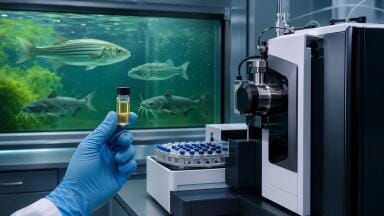
liquid chromatography-electrospray ionization-tandem mass spectrometry (LC-ESI-MS/MS) analysis, the team identified 23 mediators, with 14 that could be reliably identified and quantified.
They found that using one of these in NSAID treatment caused an increase in inflammation to begin with, followed by a significant reduction after 168 hours.
The scientists claimed that the method allows for further comprehensive analysis.





 Product directory