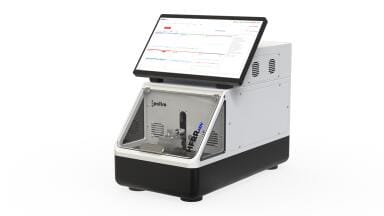
A group of pregnant Mexican women underwent urine analysis using
high performance liquid chromatography (HPLC) in order to determine their exposure to Bisphenol A.
Scientists from the US's University of Michigan, Harvard School of Public Health, Harvard Medical School and Centers for Disease Control and Prevention collaborated with the Mexican National Institute of Public Health.
Their findings, published in Environmental Health, are drawn from HPLC analysis of women taking part in the Early Life Exposure in Mexico to ENvironmental Toxicants study, named ELEMENT for short.
As well as demonstrating that Bisphenol A could be detected in urine output from pregnant Mexican women, the scientists also looked at the different quantities of the substance in mothers who carried to full term and those who gave birth prematurely.
Higher concentrations were seen in women who gave birth at or before 37 weeks than in those who exceeded the term.
Environmental Health publishes research on all aspects of how exposure to environmental conditions can impact on the wellbeing of individuals.





 Product directory