HPLC, UHPLC
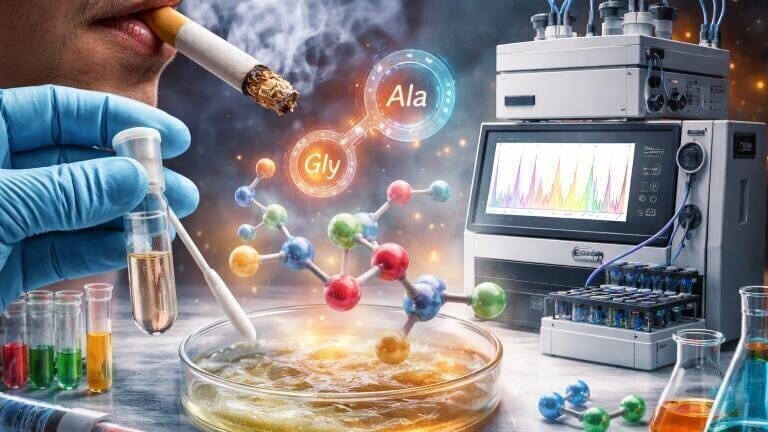
Researchers have developed a chromatography-led analytical method that combines novel solid-phase extraction with high-performance liquid chromatography to quantify trace amino acids in human saliva, identifying rapid and significant post-smoking concentrations changes of glycine and alanine
A study has reported the development and validation of a chromatography-centred analytical method to quantify trace amino acids in human saliva and to track their dynamic response to cigarette smoking. The work has addressed a longstanding analytical challenge in amino acid measurement, namely the combination of extremely low endogenous concentrations with substantial chemical interference from complex biological matrices.
Smoking is widely recognised as a major cause of preventable disease and mortality, with established links to cardiovascular disease, cancer, chronic respiratory disorders and metabolic dysfunction. Tobacco smoke contains more than 5,000 chemical constituents, more than 150 of which have been identified as harmful. This chemical complexity has hindered the identification of robust biomarkers of smoking exposure and effect.
Metabolic disruption of amino acids has emerged as a plausible mechanistic link between smoking and disease, yet reliable analytical strategies to quantify amino acids in non-invasive samples such as saliva have remained limited.
The research team focused on chromatography as the central analytical tool and sought to overcome the poor performance of conventional solid-phase extraction in amino acid analysis. Amino acids are highly polar compounds, and traditional ion-exchange extraction methods often require large elution volumes followed by evaporation and reconstitution, which increases processing time, solvent use and analytical variability. To address this limitation, the researchers selected poly-3,4-ethylenedioxythiophene electrospun nanofibres as a conductive polymer adsorbent capable of enhanced interaction with polar analytes.
Saliva samples were first derivatised with dansyl chloride (dimethylamino naphthalene-sulfonyl chloride) to introduce ultraviolet-active chromophores and thereby enable chromatographic detection.
Thirteen amino acids were targeted, including:
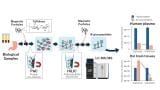
Following derivatisation, the samples underwent solid-phase extraction using poly-3,4-ethylenedioxythiophene nanofibres prior to separation and quantification by high-performance liquid chromatography (HPLC) with ultraviolet detection.
Optimisation of the extraction and chromatographic conditions formed a substantial component of the study. The researchers adjusted the sample acidity, adsorbent mass and column geometry to maximise analyte recovery and chromatographic performance. At a sample pH of 2, amino acids were predominantly protonated, which enhanced hydrogen bonding and electrostatic interactions with the nanofibre surface.
An adsorbent loading of 18 mg was identified as the optimal balance between extraction efficiency and elution practicality. Under these conditions, the method achieved quantitative limits ranging from 0.15 to 0.45 micrograms per millilitre across the thirteen amino acids.
Method validation demonstrated recovery rates between 61.8 per cent and 130.2 per cent, with precision values from 3.6 per cent to 12.0 per cent relative standard deviation. The conductive polymer nanofibres also provided effective matrix clean-up, which resulted in sharper chromatographic peaks and reduced background interference compared with traditional extraction approaches. Notably, the workflow avoided solvent evaporation and re-dissolution steps, thereby reducing labour intensity, contamination risk and organic solvent consumption.
The validated chromatography-based method was applied to saliva samples collected from six healthy male volunteers aged between 30 and 40 years. Amino acid concentrations were measured before smoking and at defined intervals afterwards to assess short-term metabolic responses. Compared with non-smoking baseline samples, the areas under the concentration–time curves for glycine and alanine increased significantly following cigarette smoking, with peak concentrations observed 15 minutes after exposure. These changes reached statistical significance with p values below 0.05.
“Smoking caused rapid and measurable shifts in specific salivary amino acids,” the researchers reported, adding that glycine and alanine may play a role in the biochemical mechanisms underlying smoking-related physiological responses.
While the study was not designed to establish causality or disease relevance, the findings have suggested that saliva-based amino acid profiling could offer a window into acute metabolic effects of smoking.
The researchers discussed the relationship between adsorbent structure and extraction performance in detail. Hydrophobic polymer nanofibres without conductive coatings failed to retain polar amino acids effectively, whereas conductive polymer coatings preserved the fibrous architecture while introducing functional groups capable of hydrogen bonding and electrostatic interaction. Poly-3,4-ethylenedioxythiophene nanofibres outperformed comparable materials by combining high adsorption capacity with practical cartridge handling and chromatographic compatibility.
The study also acknowledged several limitations, notably the small cohort size, restricted age range and exclusive inclusion of male participants limited the generalisability of the findings. Dietary intake and oral health status were not strictly controlled which may have contributed to variability in amino acid profiles. In addition, only thirteen amino acids were analysed and other metabolically relevant compounds may have been overlooked.
Despite these constraints, the researchers concluded that the chromatography-led approach provided a robust and efficient strategy for amino acid analysis in saliva. By integrating conductive polymer nanofibre extraction with HPLC and ultraviolet detection, the method enabled sensitive, reproducible and practical quantification of trace amino acids in a non-invasive biological matrix.
The observed post-smoking increases in glycine and alanine have opened avenues for further investigation into salivary biomarkers of smoking behaviour and its physiological and psychological effects.
For further reading please visit: 10.7759/cureus.102104

 Product directory









.jpg)
.jpg)