GC, MDGC
Published over 13 years ago. See the latest and most current information on GC, MDGC.
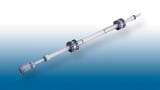
The SLB-IL111 from Sigma Aldrich utilizes an extremely polar ionic liquid stationary phase, and has a 270 °C maximum temperature. These features provide significant chromatographic improvements over existing column technology for several applications. Specifically: Benzene and other aromatics in gasoline: Elution of C5-C12 aliphatics prior to benzene, reducing aliphatic/aromatic overlap and allowing more accurate and reproducible aromatic reporting. Elution of heavy constituents (methylnaphthalenes) in a timely manner with improved peak shapes, eliminating the need for two-column switching procedures. Nearly baseline resolution of benzene and ethanol in reformulated gasoline, Fatty acid methyl ester (FAME) profile in B20 biodiesel: Elution of most petroleum-based diesel components (hydrocarbons) prior to most biomass-based diesel components (FAMEs), allowing the FAME profile (a measure of purity) to be determined in blended fuels and cis/trans FAME isomers: Resolution/separation of key FAME isomers that cannot be performed by other columns. When used in a complementary fashion, the widely-used SP-2560 and SLB-IL111 provide more complete and accurate fatty acid identification and composition information than currently possible, used to report trans fat content. For more information www.sigma-aldrich.com

 Product directory