Purification
Published over 9 years ago. See the latest and most current information on Purification.
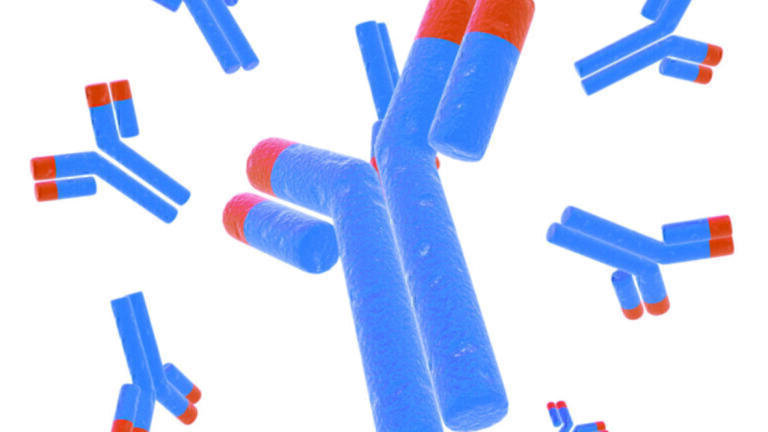
For purification of monoclonal antibodies, high demands are required from the separating material. Factors influencing the binding characteristics of IgG are pH, linear velocity and/or salt concentration (conductivity) at the time the sample is loaded onto the column.
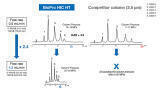
Therefore, a material with highly stable performance is required with regard to all those factors. In order to demonstrate the performance of YMC-BioPro materials, several studies have been performed.
• Purification of Adalimumab
• Influence of pH
• Influence of linear velocity
• Influence salt concentration
In order to demonstrate the behaviour of BioPro SmartSep under different elution condi¬tions, experiments with different values of pH, linear velocity and salt concentration were performed and the dynamic binding capacity (DBC) recorded.
The parameters changed were:
pH: 6.0 vs. 5.3
Linear velocity: 200 - 800 cm/hr
Salt concentration: 0 - 50 mM NaCl
BioPro SmartSep S30 particles
High binding capacities are achieved regardless of elution of pH. Therefore, milder eluting conditions for Adalimumab can be selected.
BioPro SmartSep maintains higher binding capacity values over a wider range of linear velocity. This will increase product throughput for the purification work without loss of efficiency.
BioPro SmartSep has higher salt concentration tolerance. This simplifies the desalting pro¬cess after Protein A chromatography and will help to shorten the production process.
BioPro SmartSep materials meet the highest demands for the purification of monoclonal antibodies. High binding capacity is achieved regardless of elution of pH, linear velocity or salt concentration. This allows purification processes to be carried out more efficiently.
• Milder eluting conditions can be selected
• Higher throughput at stable efficiencies
• Simplification of desalting processes for shorter processes
 Product directory