Analytical instrumentation
Adequate oxidation stability is essential for all fuels, regardless of composition, feedstock, or biofuel content. While oxidative degradation alters fuel properties, diminishing quality and engine performance, antioxidant additives help to delay the onset of oxidation and the formation of oxidation products to ensure safe operation over a longer period.
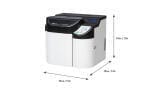
RapidOxy 100 Fuel, Anton Paar’s oxidation stability testing instrument, is the only device that performs the Rapid Small Scale Oxidation Test (RSSOT) in full compliance with EN 16091, ASTM D7545, and ASTM D7525, and is officially accepted as a significantly faster alternative to EN 15751 and ASTM D525 in the relevant fuel specifications.
RSSOT measurement of the induction period helps ensure oxidation stability across all diesel and gasoline fuel types, independent of composition, feedstock, or biofuel content. RapidOxy 100 Fuel combines precise temperature control with full automation to eliminate user error and provide reproducible, repeatable results across diesel (B0 to B100) and spark-ignition fuels. The built-in safety features, compact benchtop design, and low sample volume enhance efficiency and space utilization, making it a practical choice for laboratories.
This article outlines the RSSOT method, its underlying measuring principle, and its relevance for research applications. The method’s versatility is demonstrated using data from a renewable diesel fuel study and analysis of how antioxidant concentration influences the induction period in spark ignition fuel. Its performance for gasoline is assessed by comparing the method with the conventional D525 oxidation stability test.
Oxidation stability is a critical property for all types of fuels, regardless of whether the feedstock is fossil-based or renewable. It is a mandatory parameter in many specifications for diesel and spark ignition fuels. Although oxidizing components vary by fuel type, their effects are similar. Oxidation typically leads to darkening, polymer formation, and a reduced induction period. Fuel aging can occur both during storage and in use. The process begins with the formation of hydroperoxides, followed by a series of reactions that produce aldehydes, acids, and polymers.
As oxidation progresses, increased acidity can lead to rust and corrosion. Polymeric products cause oil thickening or form insoluble materials that impair viscosity control and may block filters and nozzles.
Antioxidant additives extend the induction period, increasing the time fuel can be stored and used before the formation of oxidation products compromises safe operation. However, the effectiveness of an antioxidant depends on both its chemical type and the fuel’s composition. To achieve the most cost-effective solution for a given fuel blend, thorough screening of antioxidant types and their concentrations is often essential.
The RSSOT – implemented as a fully automatic procedure in the RapidOxy 100 Fuel – is the fastest possible way to determine oxidation stability according to the specifications for diesel and spark ignition fuels. It enables determination of the induction period for diesel – regardless of feedstock and percentage of biodiesel content – and for spark ignition fuels using a single instrument, as opposed to needing a different one for each fuel type.
The RSSOT measures the induction period (IP) of the full range of diesel fuels (B0 to B100) and spark ignition fuels to indicate oxidation and storage stability. The method is fully automated by the RapidOxy 100 Fuel and is suitable regardless of the fuel’s feedstock or whether ethanol or other oxygenates are blended in.
According to EN 16091, ASTM D7545, and ASTM D7525, a small sample volume of 5 mL is filled into the test chamber, and the preset program – either “B0–B100” or “gasoline” – is started. At this point, all manual steps are complete. The closed test chamber is automatically pressurized with oxygen to 700 kPa for diesel or 500 kPa for gasoline and heated to 140 °C.
The measurement concludes when the break point is reached, defined as a 10 % pressure drop below the maximum pressure (see Figure 1). The principle is straightforward: The longer the induction period, the more oxidatively stable the sample.
Compared to traditional methods, RSSOT delivers significantly shorter measurement times. For diesel fuels, the induction period limit is 60 minutes, making the test 20 times faster than EN 15751 across EN 590 (B0 to B7), EN 16734 (B10), and EN 16709 (B20 to B30). For gasoline, ASTM D4814 now recognizes RSSOT as an alternative to ASTM D525, with a reduced induction period of 31 minutes compared to 240 minutes – nearly eight times faster.
Renewable fuels such as hydrotreated vegetable oil (HVO) and gas-to-liquid (GTL) are gaining approval for commercial use worldwide as part of sustainability and decarbonization efforts. Both fossil and renewable fuels must meet the same specifications, including requirements for oxidation stability.
To meet current market demands, the repeatability of the RSSOT was investigated using an HVO and a GTL sample. Four consecutive measurements were carried out with both an HVO and a GTL sample and the repeatability was calculated. The results are shown in Table 1 (HVO) and Table 2 (GTL).
Table 1: HVO sample, repeatability study of RSSOT Table 2: GTL sample, repeatability study of RSSOT
For the HVO sample, the maximum deviation between results was just two minutes – well within the repeatability limit defined in EN 16091. Both samples met the 60-minute induction period requirement specified in EN 590. The trial demonstrates the repeatability of the RSSOT method across different renewable fuel types, confirming its suitability for applications beyond fossil-derived diesel.
Unlike ASTM D7525, which defines the break point for the RSSOT by a specific pressure drop threshold, the traditional method ASTM D525 applies two consecutive drops, each 14 kPa, within 15 minutes for the determination. The induction period is the time elapsed from the start of heating to this break point.
Despite sharing a similar oxidation principle, ASTM D7525 (RSSOT) and ASTM D525 differ significantly in test temperature, sample volume, and break point criteria (see Table 3 for overview).
Table 3: Comparison of the RSSOT (ASTM D7525) with ASTM D525
Due to the higher test temperature, ASTM D7525 reaches the break point multiple times faster. Moreover, ASTM D525 defines the break point as two consecutive pressure drops of 14 kPa within 15 minutes. For some spark ignition fuel samples this criterion is never met and the induction period cannot be determined. In contrast, the clear definition of the ASTM D7525 break point (pmax – 10 %) ensures that every test yields an induction period, including for samples containing ethanol or other oxygenates.
Additionally, the small sample volume of just 5 mL, combined with the design of the RapidOxy 100 Fuel, eliminates the need for a burst disk. Safety remains a top priority in the RSSOT method, which is why the instrument includes automatic over-temperature and over-pressure shutoff mechanisms.
To minimize any risk to laboratory personnel, the safety hood remains locked throughout the measurement process and can only be opened once the sample chamber has cooled and pressure has been released in a controlled manner.
To sum up, the RSSOT offers a faster, safer, and fully automated alternative to the traditional pressure vessel method. The Rapid Small Scale Oxidation Test was recently included in ASTM D4814 with a 31-minute induction period limit, serving as an alternative to ASTM D525. This inclusion enables significantly faster product release. Its advantages also make RSSOT an ideal tool for the rapid optimization and approval of gasoline formulations.
This study used a raw gasoline sample containing ~40 % olefins and a commercially available antioxidant added at concentrations from 0 ppm to 50 ppm. To assess the impact of the antioxidant additive and allow direct comparison the induction period was recorded according to both ASTM D7525 (RSSOT) and ASTM D525 (see Table 4).
ASTM D7525 (RSSOT) recorded a short induction time of 13.55 min at 0 ppm antioxidant, which increased to 17.60 minutes at 50 ppm. Due to the lower temperature and the different definition of the break point (see Table 3) ASTM D525 yielded a significantly longer induction time of 199.34 minutes at 0 ppm, with similar increases observed as the antioxidant concentration rose.
Table 4: Influence of antioxidant additives on the induction period of gasoline with high olefin content
To illustrate the effect of the antioxidant additive, its concentration was plotted against the RSSOT induction period. Figure 2 (top) reveals a strong linear correlation with a coefficient of determination R² = 0.99, confirming that oxidation stability increases proportionally with antioxidant dosage.
Induction times measured by ASTM D7525 (RSSOT) and ASTM D525 show a strong linear correlation when plotted against each other, yielding a coefficient of determination of R² = 0.98
(see Figure 2, bottom).
Compared to ASTM D525, the ASTM D7525 method offers faster feedback for fuel blend optimization and helps avoid unnecessary antioxidant overdosing.
Figure 2. Influence of antioxidant concentration on the induction period measured with the RSSOT (top), and plot of ASTM D7525 induction period against ASTM D525 induction period for a gasoline with an olefin content of approx. 40 % (bottom).
Ensuring oxidation stability is essential for all fuel types regardless of their composition, feedstock, or biodiesel and ethanol content. Oxidative degradation alters fuel properties and can reduce quality and impair engine performance. The standard methods using the RSSOT (EN 16091, ASTM D7545, and ASTM D7525) allow for a significantly reduced measurement time for product release according to specifications.
The method’s effectiveness in determining oxidation stability across a range of fuels is supported by test data and experimental results. In spark ignition fuel studies, the traditional ASTM D525 test serves as a reference for validating RSSOT performance.
The RapidOxy 100 Fuel combines precise temperature control with full automation to eliminate user error and deliver reproducible, repeatable results across diesel (B0 to B100) and spark-ignition fuels.
Designed for safety, efficiency, and space savings, RapidOxy 100 Fuel features a compact benchtop design, integrated overpressure and overtemperature protection, and minimal sample volume – making it the perfect fit for fuel laboratories.



 Product directory