Analytical instrumentation
Viscosity is a key performance and classification parameter for engine and gear oils or driveline lubricants. Modern instrumentation enables precise, standardized testing across both high- and low-temperature ranges.
Viscosity plays a central role in defining the performance, reliability, and energy efficiency of engine and driveline lubricants. It is not only one of the most important fluid properties from a mechanical engineering standpoint, but also central to regulatory and classification frameworks across the global automotive industry.
Two key standards govern lubricant classification in terms of viscosity: SAE J300 for engine oils and SAE J306 for gear and driveline oils. Published by the Society of Automotive Engineers (SAE), these standards set the minimum and maximum viscosity values required for various oil grades to ensure proper lubrication across different operating conditions.
For decades, the standard method for measuring kinematic viscosity was ASTM D445, using capillary viscometers. While this method remains valid, it presents several challenges for modern testing labs, including high solvent and energy consumption, limited flexibility, and the need for temperature-controlled baths. An increasingly adopted alternative is ASTM D7042 – a Couette-type rotational viscometry method combined with digital density determination, as implemented in Anton Paar’s SVM series.
ASTM D7042 is now officially referenced in both SAE J300 and SAE J306 standards, validating its use in determining kinematic viscosity at 100 °C. Complementing this, ASTM D2983 is required by SAE J306 to assess the low-temperature flow properties of W-grade gear oils. A contemporary implementation of this method is provided by ViscoQC in combination with the PTD 175 Peltier temperature device, offering an automated, safe, and energy-efficient alternative to traditional systems.
This article explains the cornerstones of SAE J300 and J306 and examines instrumentation for both ASTM D7042 and ASTM D2983 testing.
The SAE J300 standard establishes a viscosity-based classification system for engine oils, ensuring reliable engine performance across a wide range of temperatures. It is widely adopted by engine manufacturers, lubricant formulators, and quality control laboratories globally. The specification includes four distinct viscosity measurements:
Test method: ASTM D4683 or equivalent
SAE J300 classifies engine oils into two main series of viscosity grades: those containing a “W” (winter) designation and those without. The standard further distinguishes between single-grade (monograde) and multi-grade oils:
In contrast, multi-grade oils, which dominate the market today, combine the properties of both low- and high-temperature performance, lubricating and protecting engines all year round. These oils meet both low-temperature cranking and pumping and maximum kinematic viscosity and HTHS viscosity criteria at 100 °C and 150 °C, respectively.
Example: What does a 5W-40 viscosity grade signify?
Table 1 presents results of kinematic viscosity measurements at 100 °C, performed according to ASTM D7042, which has been an officially accepted test method in SAE J300 for this parameter since 2021. Repeatability values (r, 2σ) are included, along with the viscosity ranges defined in SAE J300. All data were obtained using an SVM 3001 smart viscometer, equipped with an Xsample 530 automated sample changer.
SAE J306 defines the viscosity classification system for driveline lubricants, including automotive gear oils, axle lubricants, and manual transmission fluids. To accommodate evolving gear and lubricant technologies, the standard is periodically updated with new viscosity grades to meet the performance requirements of various drivetrain components.
SAE J306 includes the following key viscosity-related tests:
Test method: ASTM D7042 or D7042
Test method: ASTM D2983
As in SAE J300 for engine oils, SAE J306 defines two series of viscosity grades: those with a “W” (indicating low-temperature performance) and those without. The standard also differentiates between single-grade and multi-grade gear oils.
Example: What does a viscosity grade of 80W-90 signify?
It is important to note that SAE gear oil viscosity grades should not be confused with SAE engine oil grades, even if they appear numerically similar. For example:
Additionally, SAE J306 and J300 differ in their low-temperature testing protocols:
Low-temperature viscosity of gear oils is determined using ASTM D2983, and the viscosity requirement varies depending on the W-grade: For some W-grades, a maximum viscosity at -40 °C is specified, while for others, a defined temperature is set at which the oil must not exceed 150,000 cP.
Unlike engine oils, SAE J306 does not require high-temperature high-shear (HTHS) viscosity measurements, as these are less critical for gear applications.
Table 2 presents kinematic viscosity results at 100 °C for four gear oils, measured with an SVM 4001 smart viscometer in accordance with ASTM D7042, which was officially approved in the latest, 2025 revision of J306. The results are shown alongside the SAE J306 viscosity limits for each grade.
The SVM 4001, equipped with a dual-cell design, is ideally suited for formulated lubricants. It enables simultaneous determination of kinematic viscosity at two temperatures – typically 40 °C and 100 °C – allowing on-the-fly calculation of the viscosity index (VI). In addition, density measurements at both temperatures allow extrapolation of the density at 15 °C, providing further valuable data for lubricant characterization.
All measurements demonstrated excellent repeatability (r, 2σ), highlighting the instrument’s precision and suitability for advanced lubricant analysis.
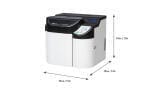
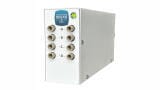
Image 2: SVM 3001: Maximum Flexibility – Multiple Parameters and Widest Temperature Range
Both SAE J300 and SAE J306 standards officially recognize ASTM D7042 as an approved method for determining high-temperature kinematic viscosity. Compared to the traditional capillary method ASTM D445, D7042 offers a range of compelling advantages that enhance efficiency, reduce operational costs, and provide significantly greater analytical flexibility:
Depending on specific laboratory requirements, a variety of ASTM D7042-compliant viscometers are available – ranging from compact, single-temperature units to advanced systems that support full automation, VI calculation, and temperature or time-based viscosity scans.
In contrast to ASTM D445, which provides only a single parameter (kinematic viscosity), D7042 viscometers enable more comprehensive analysis of lubricant properties in a single, efficient measurement – making it the modern, versatile choice for laboratories operating under SAE J300 and J306.
Image 3: SVM 1001 Simple Fill (ASTM D7042) and ViscoQC 300 with PTD 175 (ASTM D2983, Procedure D)
D2983 describes four different procedures, A, B, C and D, each requiring a different configuration, whereby it is sufficient to follow just one of the procedures to comply. Procedure D is widely regarded as the modern automated test method, as the heating, cooling, and measurement of the sample are performed in one go without the need for further operator intervention and with only one instrument configuration.
A, B, and C require more intervention, as the test samples have to be externally pre-conditioned before they are transferred to the temperature control unit (see Table 3). Procedure D is also the safest and most eco-friendly, as no hazardous cooling liquids are required and the power consumption is only a fraction of that required for the other procedures.
While Procedures A to C allow a cooling process of multiple samples simultaneously (in contrast to the usual single-position instruments of Procedure D), they still have to be measured manually one after the other. In addition, careful time coordination is essential, as these three procedures must start simultaneously for all samples, and measurements must begin immediately after the cooling process is complete – a critical requirement given that the cooling process takes 865 minutes.
Increasing the number of devices capable of performing procedure D will enhance throughput and significantly improve both the flexibility of test initiation times and therefore overall lab efficiency.
With ASTM D7042 now officially recognized in both the SAE J300 (2021) and SAE J306 (2025) standards, laboratories have a robust and validated alternative to traditional capillary methods for determining kinematic viscosity at 100 °C.
The SVM series viscometers from Anton Paar, which implement D7042, offer enhanced automation, lower operating costs, and maximum flexibility. By combining these high-temperature viscosity measurements with low-temperature tests via ASTM D2983, supported by rotational viscometers like ViscoQC, laboratories can cover the full spectrum of SAE J306 requirements.


 Product directory