Analytical instrumentation
Viscosity remains one of the most fundamental physical parameters in the petroleum and chemical industries.
It governs flow behaviour, pumpability, heat transfer, lubrication performance and ultimately product quality.
For decades, viscosity testing has been associated primarily with classical applications such as crude oil characterisation or quality control (QC) of finished fuels and lubricants.
Standards like ASTM D445i and ASTM D7042ii are deeply embedded in specifications for distillate fuels, jet fuels, hydraulic oils and engine lubricants.
However, the role of viscosity measurement has evolved. Modern analytical platforms now enable far more than routine compliance testing.
Advanced viscometers, such as instruments compliant with ASTM D7042, combine dynamic viscosity and density measurement in a single system and offer temperature scans, time-dependent analysis, and automated calculation of derived parameters.
These capabilities open the door to application areas that extend well beyond traditional refinery feedstocks and finished fuels.
In this article, we explore several advanced and emerging application fields characterised by multiparameter workflows: lubricant additives, immersion cooling fluids and pyrolysis oils.
These examples illustrate how modern viscosity testing technology is no longer confined to standard QC, but has become a versatile analytical tool supporting research, development, sustainability and next-generation technologies.
Historically, viscosity measurements were predominantly linked to raw materials and standardised products, including crude oil, base oils, diesel fuels, aviation turbine fuels and formulated lubricants.
Their purpose was clear: ensure specification compliance and guarantee safe and reliable operation.
While this fundamental type of characterisation remains essential to this day, the scope of viscosity testing has expanded significantly.
Entire industries now depend on engineered fluids whose performance is critically governed by their viscosity behaviour over a broad temperature range.
These fluids often do not fit neatly into conventional fuel or lubricant categories. Instead, they serve as heat transfer media, functional additives or alternative feedstocks.
Their evaluation therefore requires more flexible and informative viscosity testing methods.
Modern ASTM D7042-compliant viscometers measure dynamic viscosity directly and determine kinematic viscosity through simultaneous density measurement.
In addition, they enable automated temperature scans, time scans, and calculation of derived parameters such as viscosity index (VI), viscosity-gravity constant (VGC), mean molecular mass (M), and calculated carbon aromaticity index (CCAI).
These features transform viscosity measurement from a single-point compliance test into a comprehensive characterisation tool.
Lubricant additives represent a class of materials rarely associated with straightforward viscosity testing. Yet, kinematic viscosity at 100 °C is a mandatory specification parameter for viscosity index improvers (VII) and other additive components.
Additives such as polymethacrylates (PMA), olefin copolymers (OCP), zinc dialkyldithiophosphates (ZDDP), dispersants and corrosion inhibitors are often highly viscous and chemically aggressive.
Their characterisation requires instruments capable of handling viscosities in the range of several thousand mm²/s at elevated temperatures, while ensuring material compatibility.
In a study of various lubricant additives and additive packages with a D7042-compliant SVM 3001 viscometer, kinematic viscosities at 100 °C ranged from approximately 9.6 mm²/s (ZDDP solution) to nearly 2,900 mm²/s for high-performance viscosity index improvers (VIIs). Repeatability values were typically below 0.1 %, demonstrating high measurement precision even for challenging samples.
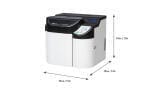
Picture 1: SVM 3001: ASTM D7042 Viscometer with sample changer Xsample 631.
Table 1 summarises representative results:
Table 1: Kinematic viscosity of lubricant additives at 100 °C; n=5
Beyond single-temperature measurements, temperature table scans allow evaluation of viscosity-temperature behaviour.
For example, one VII sample (A.02) showed a viscosity decrease from over 35,000 mm²/s at 40 °C to approximately 2,900 mm²/s at 100 °C.
From such datasets, the viscosity index can be calculated automatically according to ASTM D2270, yielding VI values up to 369 for high-performance improvers.
Figure 1: Viscosity-temperature profile of a VII (A.02) and two lubricant additives (A.03 and A.04)
In one case (sample A.02), a slight decrease in viscosity of -0.18 % over 43 minutes was observed at 100 °C, providing insight into structural stability under prolonged shear.
Such information is invaluable during additive formulation and stability testing.
Figure 2: Viscosity change of a VII (A.02) over time
These examples demonstrate that viscosity testing of additives extends well beyond traditional finished lubricant QC.
It supports product development, polymer design and performance optimisation.
The rapid growth of artificial intelligence, cloud computing, and high-density server farms has driven the development of immersion cooling (IC) systems. These systems use dielectric fluids – such as synthetic hydrocarbons, mineral oils, gas-to-liquid (GTL) fluids, and natural esters – to dissipate heat directly from electronic components.
In this context, viscosity is not merely a specification parameter; it directly influences heat transfer efficiency, fluid flow and
pump performance. Excessive viscosity at low temperatures can impair circulation, while high viscosity indices may reduce thermal responsiveness.
Temperature table scans with an SVM 3001 viscometer between 20 °C and 70 °C provide complete viscosity profiles in a single filling.
For five different IC fluids, kinematic viscosities at 20 °C ranged from approximately 9.3 mm²/s (synthetic hydrocarbon) to nearly 69 mm²/s (plant-based ester).
At 70 °C, values dropped to between 2.7 mm²/s and 7.7 mm²/s.
Table 2: Kinematic viscosity of immersion cooling fluids (20–70 °C); n = 5
Repeatability values were typically below 0.15 %, confirming reliable performance across the temperature range.
Viscosity index values ranged from 90 to over 220, reflecting differences in base fluid chemistry. Additionally, dynamic viscosity at 25 °C provided rapid benchmarking under ambient conditions.
These measurements illustrate how viscosity testing now supports industries far removed from classical petroleum refining. In data center applications, viscosity measurement becomes a tool for energy efficiency optimisation and thermal system design.
Sustainability initiatives have accelerated interest in pyrolysis oils derived from waste plastics, biomass, agricultural residues or used tires.
These oils serve as alternative feedstocks or intermediate fuels. However, their composition is highly variable, often including water, volatile fractions, and solid residues.
Viscosity plays a critical role in injection behaviour, atomisation, storage stability and combustion performance.
In addition, density can serve as a non-specific quality control parameter, while the Calculated Carbon Aromaticity Index (CCAI) provides valuable insight into ignition quality.
Three representative pyrolysis oils, measured with an SVM 3001, showed kinematic viscosities at 40 °C of 5.5 mm²/s (low-viscosity fraction), approximately 58 mm²/s (water-containing sample), and 145 mm²/s (highly viscous oil).
Temperature scans from 20 °C to 100 °C revealed strong temperature dependence, particularly for viscous samples (from ~760 mm²/s at 20 °C to ~10 mm²/s at 100 °C).
Table 3: Viscosity of pyrolysis oils at 40 °C; n=10
For samples containing volatile components, measurements under 1 bar counter-pressure prevented boiling at elevated temperatures.
Such flexibility highlights the adaptability of a modern D7042 measurement system.
CCAI values, automatically determined by the viscometer, ranged between 941 and 952, indicating poor ignition quality compared to typical marine fuel oils (830 to 870) and underscoring the need for further processing.
Simultaneous density measurement at 15 °C yielded values between 1.0160 g/cm³ and 1.0639 g/cm³, consistent with feedstock origin.
Here, viscosity testing becomes a critical analytical tool in the circular economy, supporting evaluation, upgrading, and certification of alternative fuels.
As demonstrated in the examples above, modern viscosity measurement systems are no longer limited to discrete temperature points.
Temperature scans enable continuous or stepwise evaluation across a wide range from -60 °C to +135 °C.
This broad span provides deeper insight into sample behaviour across a variety of applications beyond those discussed, encompassing materials from jet fuels at sub-zero temperatures to waxes and heavy residuals at elevated temperatures.
In addition, time scan functionality allows continuous monitoring of viscosity changes at constant temperature. Such measurements reveal shear-induced structural changes or stability of complex mixtures.
Unlike traditional glass capillary techniques, which require separate measurements at each temperature, integrated thermoelectric control of modern D7042 systems allows rapid heating and cooling rates up to 20 °C per minute.
Full viscosity-temperature curves can be obtained automatically in a single analytical cycle.
The examples presented – lubricant additives, immersion cooling fluids, and pyrolysis oils – illustrate that viscosity testing has evolved into a versatile analytical discipline that goes far beyond routine raw material assessment or finished product QC.
Modern viscosity measurement solutions now support:
• Additive development
• Thermal management system design
• Sustainable fuel research
• Alternative feedstock evaluation
• Multiparameter characterisation workflows
The integration of density measurement further enables calculation of derived parameters such as the CCAI and viscosity-gravity constant, while the measurement of viscosity at different temperatures in a single workflow enables automatic VI and mean molecular mass calculation, enhancing analytical depth without additional instrumentation.
In conclusion, viscosity testing technology has progressed far beyond its historical association with refinery control laboratories. Modern ASTM D7042-compliant systems
combine dynamic viscosity, density, automated Peltier temperature control, and advanced calculation capabilities
in a single platform.
By enabling comprehensive characterisation of unconventional fluids – from high-molecular-weight additive polymers to biodegradable cooling media and pyrolysis-derived oils – modern viscometry supports innovation across emerging industries.
These capabilities reflect the increasing demand for flexibility, sustainability and analytical efficiency.
The future of viscosity testing lies not only in measuring traditional fuels and lubricants, but in enabling the development of the next generation of functional and sustainable fluids.
i ASTM D445-24, “Standard Test Method for Kinematic Viscosity of Transparent and Opaque Liquids (and Calculation of Dynamic Viscosity),” Annual Book of ASTM Standards, ASTM International, West Conshohocken, PA.
ii ASTM D7042-25, “Standard Test Method for Dynamic Viscosity and Density of Liquids by Stabinger Viscometer (and the Calculation of Kinematic Viscosity),” Annual Book of ASTM Standards, ASTM International, West Conshohocken, PA.
iii Application Report: Additives, Lubricants | Viscosity Testing of Lubricant Additives with SVM 3001. https://www.anton-paar.com/corp-en/services-support/document-finder/application-reports/additives-lubricants-viscosity-testing-of-lubricant-additives-with-svm-3001/ (accessed: 2026-03-06)
iv Application Report: Cooling Fluids | SVM 3001 – Viscosity Testing of Immersion Cooling Fluids. https://www.anton-paar.com/corp-en/services-support/document-finder/application-reports/cooling-fluids-svm-3001-viscosity-testing-of-immersion-cooling-fluids/ (accessed: 2026-03-06)
v Application Report: Pyrolysis Oil | SVM 3001 – Viscosity Testing of Pyrolysis Oil. https://www.anton-paar.com/corp-en/services-support/document-finder/application-reports/pyrolysis-oil-svm-3001-viscosity-testing-of-pyrolysis-oil/ (accessed: 2026-03-06)
vi Application Report: Petrochemicals | SVM 3001 – Advanced Features. https://www.anton-paar.com/corp-en/services-support/document-finder/application-reports/petrochemicals-svm-3001-advanced-features/ (accessed: 2026-03-06)


 Product directory