News
From the origins of liquid chromatography–mass spectrometry to machine learning–guided optimisation, leading researchers have outlined how analytical separations continue to evolve under pressure from ultrahigh-throughput demands
At March’s Pittcon 2026 in San Antonio, Texas, the LCGC International Awards Session recognised two leading figures whose work has shaped modern separation science. The annual programme – now in its nineteenth year – honoured Jack Henion with its Lifetime Achievement Award and Bob W. J. Pirok with its Emerging Leader in Chromatography Award.
For nearly two decades the awards have acknowledged internationally influential chromatographers and this year’s session continued that tradition with presentations that examined the evolution of liquid chromatography–mass spectrometry (LC–MS), ultrahigh-throughput workflows, method development strategies and the role of artificial intelligence.
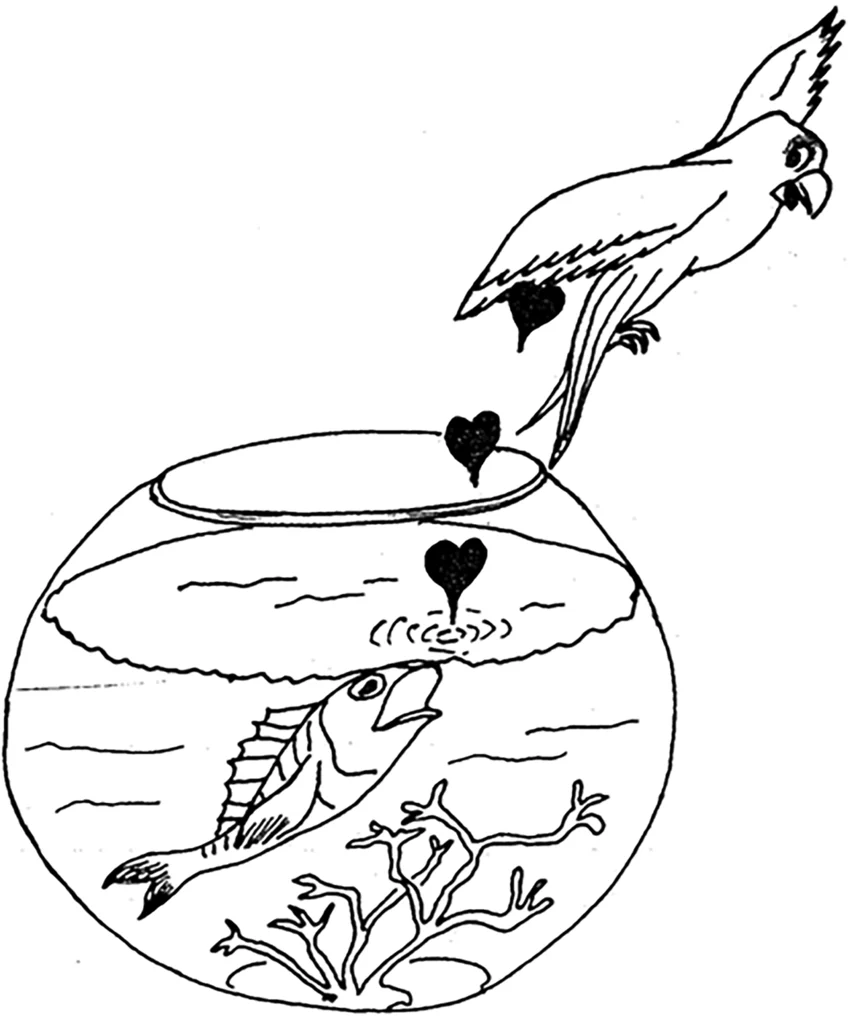
‘A difficult courtship’ – the bird and fish cartoon which was sketched by Patrick Arpino in 1981 and represented the fundamental problem coupling liquid chromatography (liquid phase) and mass spectrometry (gas phase) systems.
Credit: Patrick Arpino
Dr. Jack Henion, emeritus professor of toxicology at Cornell University and co-founder of Advion Biosciences, opened the session with a retrospective on LC–MS. He described how early efforts in the late 1970s to connect high-performance liquid chromatography to mass spectrometry ion sources faced substantial technical barriers. Patrick Arpino’s 1981 cartoon, which portrayed LC–MS as a ‘difficult courtship’, has become a widely cited metaphor for this period, with the phrase used to describe the challenge of integrating incompatible technologies.
Initial interface strategies, including direct liquid introduction, particle beam interfaces and thermospray ionisation, provided incremental progress but imposed practical constraints. The field shifted decisively with the introduction of atmospheric pressure ionisation techniques, notably atmospheric pressure chemical ionisation and electrospray ionisation. These approaches enabled ion formation at atmospheric pressure and efficient transfer into the mass spectrometer, which has allowed LC–MS to expand across pharmaceutical, clinical, environmental and forensic applications.
Henion also highlighted contemporary work on compact LC–MS systems, including mobile laboratory platforms designed to analyse breath samples for cannabis impairment, illustrating how the technology continues to move outside of laboratory settings.
Dr. Thomas Covey of SCIEX then addressed the demand for extreme throughput in drug discovery. He described acoustic ejection mass spectrometry, in which nanolitre droplets are transferred directly into a mass spectrometer through an open port interface. The approach has enabled analysis rates of one sample per second, with demonstrations that reach six samples per second and theoretical projections that approach twenty.
However, the removal of chromatographic separation introduces ion suppression and limits the ability to distinguish structural isomers. Covey presented differential ion mobility spectrometry with clustering agents to separate isomers such as citrate and isocitrate within milliseconds, alongside a magnetohydrodynamic preparation method that uses rotating ferrimagnetic beads to accelerate mixing and reaction kinetics.
Dr. Richard King of PharmaCadence Analytical Services then introduced SprayDx, a technique that seeks to address ionisation variability in electrospray ionisation. By monitoring solvent cluster ions rather than analyte signals, the method generates what he termed a ‘cluster chromatogram’, which reveals regions of ion suppression or enhancement during gradient runs. This strategy has enabled analysts to optimise conditions in real time without the need to add tracers or modify the mobile phase.
Winner of the Emerging Leader award, Dr. Bob Pirok, associate professor at the University of Amsterdam, focused on Bayesian optimisation as a route to automate method development. In such systems, algorithms iteratively propose experimental conditions, assess chromatographic performance and refine subsequent experiments within a closed loop. Platforms such as AutoLC have demonstrated that unsupervised optimisation is feasible.
He emphasised the importance of the kernel, the mathematical function that defines how relationships between variables are modelled. Although often treated as a generic component, kernel selection has a direct influence on optimisation performance. By incorporate domain knowledge into kernel design, he argued, researchers can improve efficiency and reliability in automated workflows.
The session concluded with Dr Peter Schoenmakers, also of the University of Amsterdam, who examined how computational approaches must remain grounded in chromatographic understanding. He noted that retention modelling and simulation have accelerated method development, which he described metaphorically as a shift from ‘bicycle speed’ to ‘car speed’. Hybrid strategies that combine modelling with optimisation algorithms have extended this further.
The 2026 session has underscored how separation science continues to evolve through a combination of instrumental innovation, computational methods and expert knowledge. In recognising both Henion’s foundational contributions and Pirok’s work in machine learning–driven optimisation, the awards have highlighted a field that remains both historically grounded and forward-looking.

 Product directory