Liquid chromatography
Liquid chromatography–high resolution mass spectrometry has enabled researchers to quantify and predict the removal of process-related leachables during ultrafiltration and diafiltration, with implications for biologics safety and regulatory assurance
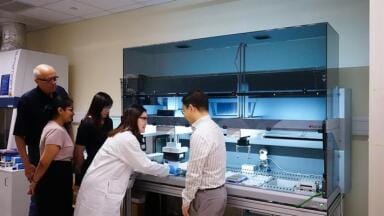
A study led by Dr. Jonathan Bones at Ireland’s National Institute for Bioprocessing Research and Training, in Dublin, has provided detailed chromatographic evidence that ultrafiltration and diafiltration can achieve consistently high clearance of process-related leachables in biologics manufacturing. The work has addressed a longstanding evidence gap by combining high-resolution analytical chemistry with systematic process evaluation to quantify how small-molecule contaminants behave during downstream purification.
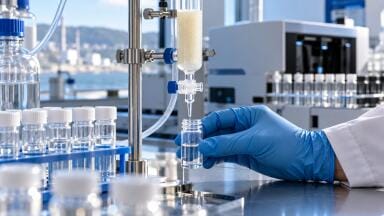
Ultrafiltration and diafiltration have long served as core unit operations in downstream processing, yet assumptions about their ability to remove low molecular weight impurities have often relied on indirect or limited datasets. To establish a more rigorous foundation, the researchers introduced 28 representative organic compounds into three distinct protein systems and tracked their behaviour through the purification process.
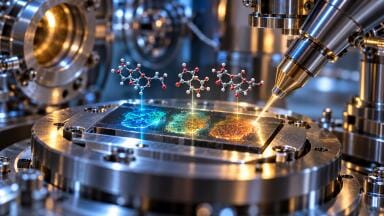
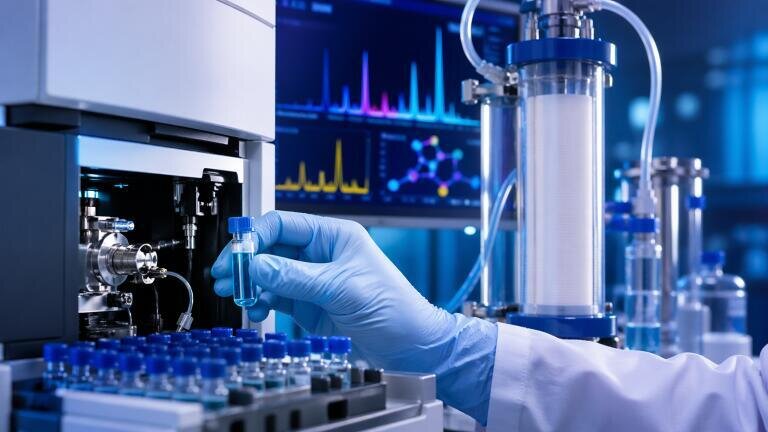
Liquid chromatography coupled to high resolution mass spectrometry provided the analytical backbone of the study, with sufficient sensitivity and selectivity to resolve structurally diverse leachables and quantify trace-level clearance with precision.
The chromatographic data have shown that 24 of the 28 compounds achieved more than 98 per cent clearance across all protein systems examined. This degree of removal proved consistent despite variation in protein composition and process conditions which suggested that the governing mechanisms extend beyond system-specific factors. Instead, the authors reported that clearance aligned closely with reproducible sieving coefficients, indicating a stable and predictable separation profile under ultrafiltration conditions.
The study has also clarified the physicochemical determinants that underpin these chromatographic observations. Lipophilicity, expressed through the octanol–water partition coefficient, emerged as the principal driver of clearance efficiency. Compounds with Log P values of below four showed near-complete removal, while even highly hydrophobic species with Log P values above seven exceeded 93 per cent clearance. Additional parameters, including molecular weight, polarizability and solvent-accessible surface area, contributed to variation in behaviour, yet none displaced lipophilicity as the dominant factor.
Crucially, the integration of chromatography with multivariate statistical modelling has extended the work beyond empirical measurement. By applying orthogonal partial least squares regression, the researchers have constructed predictive models that estimate sieving coefficients directly from compound properties. This approach offers a route to anticipate leachable clearance without the need to test every potential contaminant experimentally which may reduce analytical burden while maintaining scientific rigour.
The findings arrive at a time when regulatory authorities have intensified scrutiny of extractables and leachables in biopharmaceutical production. Demonstration of effective removal has become central to risk assessment and product safety, particularly as complex supply chains introduce a wider range of potential contaminants. In this context, chromatographic characterisation has provided both the evidential basis and the predictive capability required to support regulatory submissions.
“Liquid chromatography coupled to high resolution mass spectrometry has allowed us to quantify leachable clearance with a level of confidence that was previously unavailable and to link that performance directly to physicochemical properties,” the researchers reported which has underscored the central role of analytical separation science in modern bioprocess validation.
By uniting chromatographic measurement with predictive modelling, the study has established a more robust framework for understanding impurity clearance in ultrafiltration workflows. In an environment where trace contaminants can exert disproportionate impact on product quality, the ability to measure and predict removal with precision has marked a substantive step towards more reliable and transparent biologics manufacturing.
chromatography-ultrafiltration-leachables-clearance-lc-hrms-biologics

 Product directory