Liquid chromatography
A study of wild chimpanzees has revealed that their fruit-based diet contains enough ethanol to equal more than two alcoholic drinks per day, offering new insight into the evolutionary origins of human alcohol consumption
Chimpanzees in their native African habitats ingest the equivalent of more than two standard alcoholic drinks per day from the fruit that is the majority part of their diet, according to research from the University of California, Berkeley.
The study has provided the first direct measurements of the ethanol content of fruits available to wild chimpanzees. Researchers reported that the animals could readily consume about 14 grams of pure ethanol each day, equivalent to one standard drink in the United States.
“When you adjust for body mass, because chimps weigh about 40 kilos versus a typical human at 70 kilos, it [is equivalent to a human having] two drinks,” said Aleksey Maro, a graduate student in the Department of Integrative Biology at Berkeley.
A standard drink in the US contains 14 grams of ethanol, regardless of body size. In much of Europe, the standard is only 10 grams. The research has shown that chimpanzees’ exposure to alcohol is routine and likely mirrors the diet of our early human ancestors.
“Chimpanzees consume a similar amount of alcohol to what we might if we ate fermented food daily.
“Human attraction to alcohol probably arose from this dietary heritage of our common ancestor with chimpanzees,” Maro said.
Maro sampled 21 species of fruit at two long-term chimpanzee study sites – Ngogo in Uganda and Taï in Côte d’Ivoire. On average, the fruits contained 0.26% ethanol by weight. As primatologists have estimated that chimpanzees consume around 4.5 kilograms of fruit per day, which constitutes roughly three-quarters of their diet, the Berkeley team was able to calculate a daily intake of alcohol.
“The chimps are eating 5 to 10% of their body weight a day in ripe fruit, so even low concentrations yield a substantial dosage of alcohol,” said Dr. Robert Dudley, professor of integrative biology at Berkeley.
“If the chimps are randomly sampling ripe fruit as did Aleksey, then that’s going to be their average consumption rate, independent of any preference for ethanol. But if they are preferring riper and/or more sugar-rich fruits, then this is a conservative lower limit for the likely rate of ethanol ingestion,” he said.
Although fruit consumption is spread across the day, the chimpanzees do not show obvious signs of intoxication. Researchers observed that for a chimpanzee to become visibly drunk, it would need to eat so much fruit that its stomach would bloat. However, the findings support the view that chronic, low-level exposure to ethanol has been a long-standing element of primate diets.
This pattern is not limited to primates. Earlier this year, Dudley and colleagues reported that feathers from 10 of 17 bird species tested contained alcohol metabolites, suggesting that ethanol is widespread in the diets of fruit- and nectar-feeding animals.
“The consumption of ethanol is not limited to primates.
“It’s more characteristic of all fruit-eating animals and, in some cases, nectar-feeding animals,” Dudley said.
He added that ethanol odour may help animals locate energy-rich food, while alcohol may enhance palatability or contribute to social bonding when shared.
“It just points to the need for additional federal funding for research into alcohol attraction and abuse by modern humans. It likely has a deep evolutionary background,” concluded Dudley.
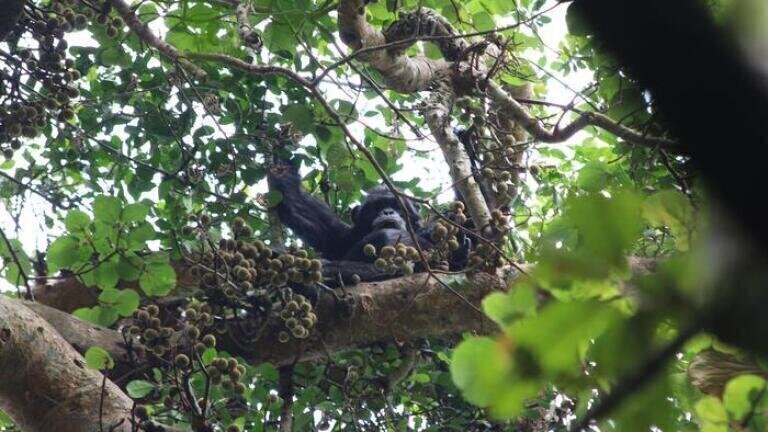
To obtain reliable data, Maro made three field expeditions between 2019 and 2022. At Ngogo, in Kibale National Park, Uganda, he collected freshly fallen figs (Ficus musuco) beneath trees where chimpanzees had recently foraged.
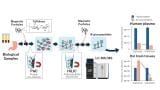
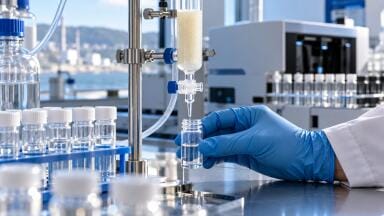
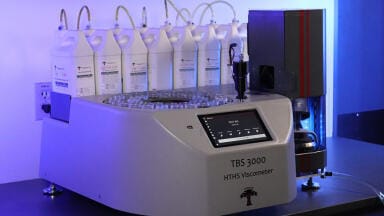
At Taï National Park, in Côte d’Ivoire, the team collected fruits such as Parinari excelsa, which are also highly favoured by elephants. Each fruit was carefully catalogued, frozen to prevent further ripening, and later analysed for ethanol content using three methods:
“I think the strength of Aleksey’s approach is that it used multiple methods. This dataset has not existed before, and it has been a contentious issue,” said Dudley.
The fruits most commonly eaten by chimpanzees at both sites were among those with the highest alcohol content. Weighted by feeding frequency, the average alcohol content was 0.32% at Ngogo and 0.31% at Taï. Male chimpanzees at Ngogo were frequently observed gathering in fig trees to eat fruit before embarking on boundary patrols.
Maro has recently returned to Ngogo to collect chimpanzee urine samples from beneath sleeping nests to test for alcohol metabolites, an endeavour that he described as ‘fraught’ since it requires an umbrella. Along with undergraduate collaborator Laura Clifton Byrne from San Francisco State University, he also analysed fruit freshly dislodged from the canopy by chimpanzees.
For further reading please visit: 10.1126/sciadv.adw1665


 Product directory