Supercritical fluid (SFC), green chromatography
Published over 3 years ago. See the latest and most current information on Supercritical fluid (SFC), green chromatography.
Supercritical Fluid Chromatography (SFC) has emerged as a powerful analytical technique in the field of food analysis, offering a range of benefits that contribute to more accurate, efficient, and comprehensive results. SFC combines aspects of both liquid chromatography (LC) and gas chromatography (GC), utilising a supercritical fluid as the mobile phase, often carbon dioxide, in a state where it exhibits both liquid-like and gas-like properties. This unique combination of properties leads to several advantages in food analysis.
Firstly, SFC is known for its compatibility with a wide range of analytes, including both polar and non-polar compounds. This versatility allows researchers to simultaneously analyse complex food matrices containing a diverse array of compounds, such as fatty acids, vitamins, pigments, and pesticides, without the need for extensive sample preparation.
Secondly, SFC offers higher efficiency and faster analysis compared to traditional techniques. The low viscosity of supercritical fluids facilitates faster diffusion, resulting in shorter analysis times. Additionally, SFC operates at lower temperatures than GC, preventing thermal degradation of heat-sensitive compounds, making it suitable for analysing delicate food components.
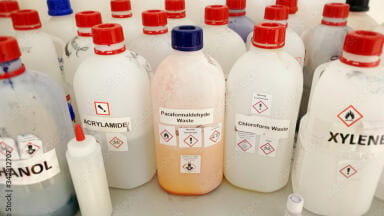
Moreover, SFC is environmentally friendly due to its use of carbon dioxide as the main solvent, which is non-toxic and non-flammable. This contrasts with traditional solvent-based methods that often require the use of hazardous organic solvents. As a result, SFC not only ensures safer working conditions but also reduces the overall environmental impact of analytical processes.
Furthermore, SFC provides superior resolution and separation capabilities, making it possible to resolve closely eluting compounds. Its compatibility with various detection methods, such as UV-visible spectroscopy and mass spectrometry, enhances the specificity and sensitivity of the analysis, aiding in the detection of trace levels of contaminants or bioactive compounds in food samples.
In conclusion, Supercritical Fluid Chromatography offers numerous benefits in food analysis. Its versatility, speed, compatibility with different analytes, environmentally friendly nature, and high-resolution capabilities make it a valuable tool for researchers and analysts striving to comprehensively understand the composition of food matrices, ensuring both food safety and quality.
More information online
 Product directory