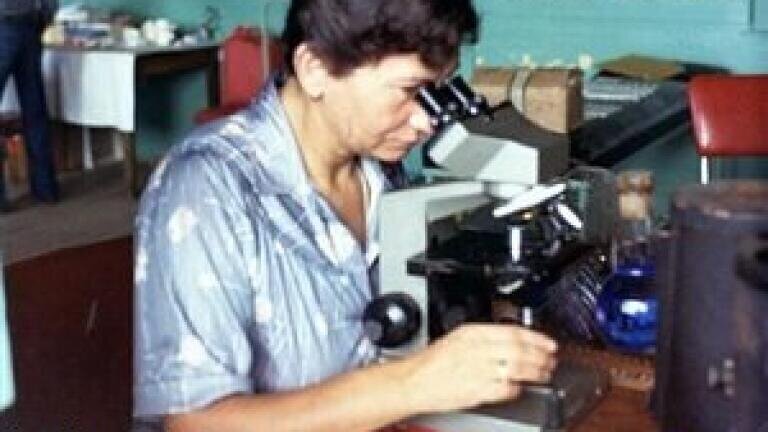
Microscopy techniques have been used by mass spectrometry specialists to ascertain the elements contained in space meteorites found in central Antartica.
Using electron microscopy and ion microscopy, the micrometeorites were analysed by researchers from the Center for Nuclear Spectrometry and Mass Spectrometry.
According to the experts, a new family of space particles was discovered in layers of ultra-clean snow four metres under the surface, with the find having no equivalent in current collections.
The investigation found the molecules may have come from some of the most distant comets in our solar system.
It is hoped that the materials will enable scientists to study assemblages present in the galaxy from when the sun and planets were formed.
Gas chromatography mass spectrometry lab workers recently used similar techniques to unveil the presence of asphalt volcanoes on the sea bed of the Santa Barbara Channel, with the research team estimating they are close to 40,000 years old.

 Product directory












.jpg)

.jpg)
.jpg)