
GC, MDGC
Published over 14 years ago. See the latest and most current information on GC, MDGC.
Scientists have used gas chromatography (GC) to determine the best way to increase tissue n-3 fatty acid (FA) content in dogs.
A study published by Acta Veterinaria Scandinavica and undertaken by teams from Germany and Denmark noted that increasing levels of tissue n-3 FA in dogs could be beneficial to some medical conditions, including atopic dermatitis, cancer and heart disease.
The scientists explained that increasing tissue n-3 FA levels through diet was the most convenient option, but sought to determine whether an n-3 FA enriched diet or putting n-3 FA additives to a dog's existing diet was most effective.
Thirty dogs were divided into groups, receiving either a control diet, an n-3 FA enriched diet or standard dry dog food with an n-3 FA additive.
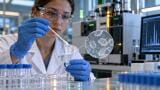
Using GC, the scientists analysed erythrocyte lipids from blood samples.
They found that an enriched diet or using an additive with a normal diet were equally as effective in increasing tissue n-3 FA levels.

 Product directory











.jpg)
.jpg)
.jpg)