Gas chromatography-mass spectrometry (GC-MS) has been used to determine which algae could be best for creating biofuel alternatives to non-renewable energy sources.
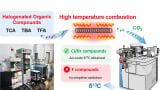
BMC Biotechnology employed pyrolysis-gas chromatography
quadrupole mass spectrometry in order to find out whether Botryococcus braunii or Chlamydomonas reinhardtii algae contained more carbon material.
The group of researchers was able to study sequences of up to 48 samples without preparation using the technique and it allowed the scientists to identify fatty acids, vitamins, sterols and fatty acid esters as well as hydrocarbons.
"Pyrolysis-GC-MS facilitates large-scale screening of hydrocarbon phenotypes for comparisons of strain differences in algae or impact of altered growth and nutrient conditions," the report said.
Sonica Devi, a student at Derby University, recently developed an ultra-sensitive means of drug detection in phone boxes using gas chromatography, which is now touring forensics conferences across the UK.

 Product directory











.jpg)
.jpg)
.jpg)