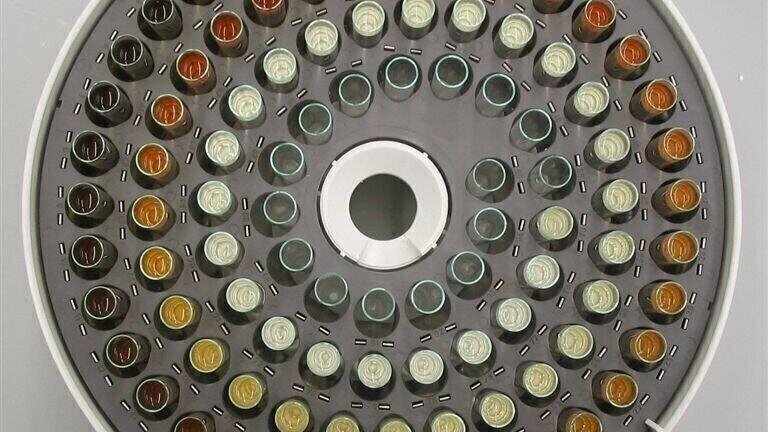
GC, MDGC
Published over 12 years ago. See the latest and most current information on GC, MDGC.
There are a multitude of factors or conditions that can cause problems with the baseline in gas chromatography (GC). Contamination of the system or gases, commonly produce baseline disturbances. 5 Ways to Extend a Gas Chromatography Column’s Life discusses methods that can help prevent some of these problems.
Spikes are electrical signals (pulses), which are initiated by an external event. Spikes are not a problem if they happen on the base line, but if a peak elutes, a spike can produce an erroneous result in the analysis, which will have to be repeated.
Spiking could be characterized as peaks of brief width, various sizes and randomly spaced along the baseline. There are two main causes of spiking on the baseline — electrical disturbances and particles passing through the detector.
Electrical disturbances due to other equipment appear when a device in the lab that “switches” electronically, inadvertently generate spikes. The solution is to switch it off! Alternatively, loose connections can cause electrical disturbances. An isolated or filtered electrical supply can help reduce disturbances produced by other electrical equipment.
Another source of spikes is if the electric contacts have been oxidized. In detection systems, the connections of the electrodes have to be checked as well as the connecting plugs. The problem of baseline spiking is discussed in the article: Improved GC Columns for the Petroleum Industry.
Noise appears as continuous small spikes along the baseline, which are quite distinct from the random, large spiking peaks. Small amounts of noise are present in most detectors. With a noisy baseline, first confirm that the attenuation is set at an appropriate level. If the attenuation level has changed, this can cause the baseline to become excessively noisy.
If the excessive noise suddenly appears it could be due to:
If the increase in noise has been gradual, then the cause is likely to be contamination in the detector. Again, the contamination source should be traced and removed and the detector cleaned.
Baseline drift is a steady increase or decrease in the baseline as a run is made. Baseline drift can occur after a column change — or if the temperature parameters are changed — and the column has not been equilibrated to its new environment. Column conditioning for new columns and stored columns can eliminate downward drift.
Upward drift during a run can indicate stationary phase contamination or stationary phase damage. If the phase is damaged, it is important that the cause is found and fixed, before the column is replaced.
Wander is characterized by a baseline that moves up and down. Wander can be due to contamination in the carrier gas, column or injector.
Offset can be described as a series of steps in the baseline. Contamination in the injector, column or detector can cause the problem. Poor electrical connections and interference from nearby instruments can cause an offset in the baseline.

 Product directory

















.jpg)

.jpg)
.jpg)