Bioanalytical
Published over 14 years ago. See the latest and most current information on Bioanalytical.
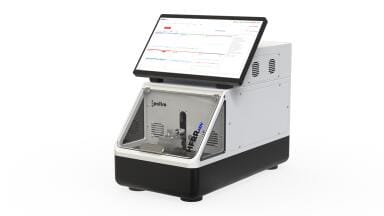
A new IC-ICP-MS method for detecting trace elements has been revealed by Thermo Fisher Scientific which has combined the ionex ICS-5000 reagent-free ion chromatography system with the Thermo Scientific XSERIES 2 ICP-Q-MS.
This method has been proven to trace levels of organic and inorganic arsenic in apple juice, with a recent consumer report investigation revealing elevated levels of arsenic in juice samples.
The distinction between organic and inorganic types of arsenic is important, as inorganic forms of arsenic are highly toxic. The highly sensitive and selective equipment allows researchers to clearly differentiate between the two.
Thermo Fisher tested four randomly selected brands of apple juice and used the Dionex IC system for chromatographic separations and the XSERIES 2 mass spectrometer for identification. This method gave researchers a highly sensitive, routine IC-ICP-MS method for determining trace metal species, including arsenic, which can be used for the analysis of different juices after a ten-fold dilution.
John W. Plohetski, vice president and general manager, ion chromatography and sample preparation business unit at Thermo Fisher commented: "The ability to distinguish between organic and inorganic forms of arsenic is critical, and our equipment is sensitive enough to capture that data accurately and reliably."
Posted by Fiona Griffiths




 Product directory