Affinity
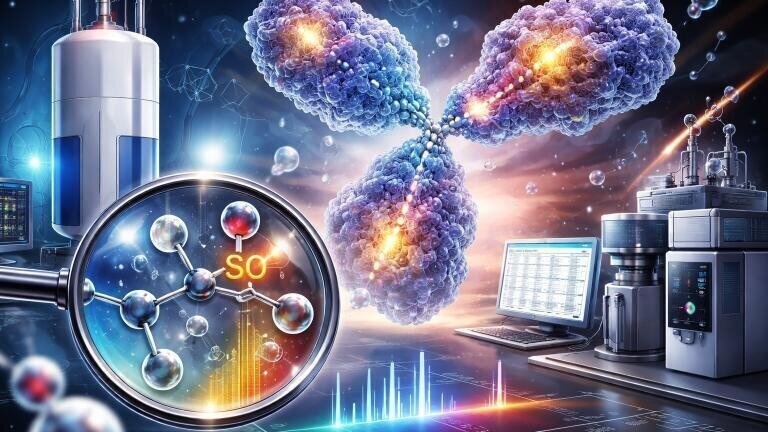
A combined nuclear magnetic resonance and liquid chromatography–mass spectrometry approach has enabled the first detailed stereo-chemical characterisation of methionine oxidation in immunoglobulin G1, with implications for antibody stability, efficacy and quality control
Monoclonal antibodies have become cornerstone therapeutics across a wide spectrum of diseases, particularly cancer and autoimmune disorders. Their clinical performance depends not only on antigen specificity but also on structural integrity. However, the transition from laboratory synthesis to clinical use has remained vulnerable to biochemical degradation. Among these processes, oxidative modification has presented a persistent challenge, with methionine residues particularly susceptible to conversion into methionine sulfoxide.
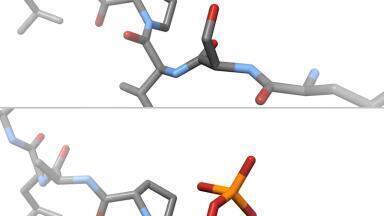
This modification does not produce a single uniform product. Instead, oxidation yields two stereoisomers – designated S and R – which differ in their three-dimensional arrangement around the sulphur atom. Stereoisomers are molecules with identical chemical compositions but distinct spatial configurations, and these differences can influence biological behaviour.
Conventional analytical techniques have detected methionine oxidation but have not resolved these stereo-chemical forms, particularly within the Fc region of immunoglobulin G1 (IgG1), where conserved methionine residues regulate stability and receptor binding.
Researchers at the Exploratory Research Center on Life and Living Systems (ExCELLS), part of the National Institutes of Natural Sciences, Okazaki, Japan, have now developed an integrated analytical strategy that combines nuclear magnetic resonance (NMR) spectroscopy with liquid chromatography–mass spectrometry (LC–MS).
This approach has enabled the first detailed stereo-chemical analysis of methionine oxidation in the IgG1 Fc region, with a focus on residues Met252 and Met428. The method has provided atomic-level insight into the structural states that arise following oxidative modification.
The study has relied on methyl-based NMR spectroscopy, which has the sensitivity to detect subtle chemical differences in the local environment of methionine residues. By analysing characteristic spectral signals from methyl groups adjacent to sulphur atoms, the researchers have distinguished between unmodified methionine and its oxidised forms, as well as between the S and R stereoisomers.
To confirm stereo-chemical assignments, the team has incorporated enzymatic selectivity into the workflow. Methionine sulfoxide reductase A selectively reduces the S stereoisomer back to methionine, while leaving the R form unchanged. By comparing NMR spectra before and after enzymatic treatment, the researchers have identified each stereoisomer with high confidence and have established a reproducible analytical framework to characterise oxidation-induced heterogeneity.
LC–MS provided complementary validation with the technique confirming the chemical identity and relative abundance of oxidised species and has mapped their distribution across the Fc region. The agreement between both analytical platforms has reinforced the reliability of the integrated approach.
These findings carry significant implications for antibody therapeutics. The Fc region mediates interactions with Fc gamma receptors and complement proteins, which influence immune activation and antibody clearance. Even subtle stereo-chemical differences may alter receptor binding affinity or circulation half-life, with direct consequences for therapeutic efficacy and pharmacokinetics.
The work also has practical relevance for biopharmaceutical development. Oxidative modifications that occur during manufacturing, storage or transport have often been assessed without regard to stereo-chemical variation. The analytical strategy described here has provided a means to monitor these changes with far greater precision, which may improve quality control and product consistency.
“Oxidation of methionine residues is a well-known issue in antibody therapeutics, but the stereo-chemical diversity of these modifications has been difficult to analyse.
“Our integrated NMR and LC–MS strategy allows us to visualise these subtle structural differences at atomic resolution,” said Dr. Koichi Kato, who led the research.
The implications extend beyond immunoglobulin G1 to other biologics that contain oxidation-prone residues. As antibody-based therapies continue to expand, demand has increased for analytical methods that can resolve molecular detail at this level.
For further reading please visit: 10.1021/acs.analchem.5c06092

 Product directory



















.jpg)