Analytical instrumentation
Modern engines are marvels of engineering precision. In both automotive and aviation applications, today’s pumps and injectors operate under extreme pressures—often exceeding 2,000 bar in diesel common-rail systems or tolerances in aircraft fuel pumps measured in microns. While fuels are valued for their energy content, one of their lesser-known but equally critical roles is as a lubricant. Without sufficient lubricity, pumps seize, injectors scuff, and mission-critical systems fail.
This dual role of fuels—as both an energy carrier and a lubricant—placed lubricity under the spotlight in the late 20th century. When environmental regulations forced refiners to remove sulphur and aromatics, they inadvertently stripped away natural lubricity agents. Widespread reports of fuel system wear made it clear: fuel lubricity had to be quantified, standardized, and controlled.
The industry responded with bench-scale lubricity tests, most prominently the High-Frequency Reciprocating Rig (HFRR) for diesel fuels and the Ball-on-Cylinder Lubricity Evaluator (BOCLE) for aviation turbine fuels. These tests became the backbone of global specifications. Yet they did not emerge fully formed—nor have they remained static. Over the past three decades, they have evolved in precision, reliability, and automation, keeping pace with new fuels and technologies.
This article explores the evolution of fuel lubricity bench tests, charting their history, challenges, refinements, and the digital future ahead.
In the 1980s and 1990s, refining processes such as hydrotreating and hydrocracking gained prominence. These methods drastically reduced sulfur, nitrogen, and aromatic content in fuels, cutting harmful emissions and enabling ultra-low sulfur diesel (ULSD) and cleaner aviation kerosenes.
However, these same processes removed polar compounds—molecules that naturally provided lubricity by adhering to metal surfaces and forming protective boundary films. Without them, fuels became “dry.”
It became urgent to define bench-scale tests that could measure lubricity consistently and provide pass/fail criteria for fuel specifications.
The Ball-on-Cylinder Lubricity Evaluator (BOCLE) emerged in the United States under the efforts of the U.S. Air Force and the Coordinating Research Council (CRC) in the late 1970s and 1980s.
In this design, a stationary steel ball is pressed against a rotating steel ring partially immersed in the test fuel. The wear scar diameter (WSD) correlates with the fuel lubricity. CRC round robins and pump rig comparisons showed strong correlation between BOCLE results and aviation fuel pump durability. By the 1990s, BOCLE became standardized as ASTM D5001.
In Europe, engineers developed the High-Frequency Reciprocating Rig (HFRR) to address diesel lubricity. In this design, a steel ball oscillates against a flat steel disk at high frequency under a fixed load, immersed in test fuel.
The wear scar diameter (WSD) correlates with the fuel lubricity. In round-robin tests, this method effectively differentiated between high- and low-lubricity fuels and also correlated with distributor pump rig wear and was standardized as ISO 12156-1 and ASTM D6079 in the 1990s.
Together, BOCLE and HFRR became the pillars of global lubricity regulation, each tailored to its industry. A brief infographic on the evolution and standardization of HFRR and BOCLE test methods is shown in Figure 1.
For diesel fuels, the lubricity requirements as measured from the wear scar diameter is set to an upper limit of 460 microns at 60 °C globally (EN 590, ISO 12156) except in US (ASTM D975) and Canada where the upper limit is 520 microns at 60 °C.
For aviation turbine fuels, the lubricity requirements as measured from the wear scar diameter is set to an upper limit of 850 microns at 25 °C globally (ASTM D1655 / DEF STAN 91-91 UK). (Figure 2)
Figure 2. Global wear scar limits for diesel and aviation fuels
Though both tests evaluate fuel lubricity under boundary lubrication conditions, there are significant differences between the operating conditions, configuration and specimens used in these tests. (Table 1 and Figure 3).
Though the Hertzian contact stresses are similar for both geometries (~ 900 MPa), BOCLE requires stricter humidity control compared to HFRR. On the other hand, HFRR requires smooth ball and disc pair (~ 0.02 micron Ra) whereas BOCLE requires a smooth ball (~ 0.02 micron Ra) on a rough ring (~ 0.5 micron Ra).
HFRR ball has a wider range of hardness (58 to 66 HRC equivalent to strength between 1.95 to 2.25 GPa) compared to BOCLE (64 to 66 HRC equivalent to strength between 2.17 to 2.25 GPa).
The early decades of HFRR and BOCLE were marked by significant variability with HFRR reproducibility (R) often 120–150 µm, uncomfortably close to the 460–520 µm specification thresholds and BOCLE reproducibility (R) ~ 370 µm. The root causes for these were
Precision became the central challenge: without reproducibility, test results could not reliably enforce regulations or assure engine durability.
Note - “precision” refers to
Repeatability (r): maximum difference expected between two results run in the same lab, same operator, same instrument, with 95% confidence.
Reproducibility (R): maximum difference expected between results from different labs under the standard method, with 95% confidence.
Global round robin studies coordinated by ASTM, ISO, and CEC with hundreds of labs tests of reference fuels under controlled conditions were undertaken.
Key improvements included:
By the early 2000s, these measures narrowed reproducibility significantly, giving regulators the confidence to make lubricity requirements legally enforceable worldwide.
The precision quantified from repeatability (r) and reproducibility (R) for both HFRR and BOCLE test standards is plotted in Figure 4. One of the key difference is that HFRR has a fixed value of r and R across a wide range of wear scars, whereas BOCLE has r and R values that depend on the wear scar diameter.
Within the HFRR testing community, there is anecdotal data that points to r and R being dependent on diesel fuel lubricity, nature of wear and type of scar produced. Complicating this further are challenges with defining scar boundaries especially the region of wear that is less well-defined.
A better understanding of this will emerge from future round robin programs and with implementation of automated edge detection functions for accurate wear scar measurement
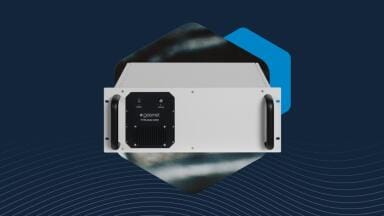
The past two decades have seen lubricity testing move from precision improvements toward automation and digitalization. Modern lubricity testers (Figure 5) offer streamlined fully automated workflows,
AI-enabled edge detection and automated wear scar measurements and advanced sensors for data-logging and diagnostics.
Such systems can make a profound impact on precision and address challenges associated with repeatability and reproducibility.
The lubricity story is not only about conventional fuels. As the world pivots to renewable and synthetic fuels and sustainable aviation fuels, lubricity testing is more critical than ever.
New chemistries and novel molecules in synthetic fuels may interact with metal surfaces differently, requiring new calibration data. Interlaboratory variability continues to persist near pass/fail thresholds and ability to differentiate additized fuels.
Automation and digitalization will boost the precision of HFRR and BOCLE ensuring that sustainable fuels are safe drop-in replacements.
1. Worldwide Fuel Charter 2019 - https://www.acea.auto/publication/worldwide-fuel-charter-2019-gasoline-and-diesel-fuel/
2. “ISO Diesel Fuel Lubricity Round Robin Program,” SAE Technical Paper 952372, 1995, Nikanjam, M., Crosby, T., Henderson, P., Gray, C. et al.,
3. “Ball on Cylinder Testing for Aviation Fuel Lubricity,” SAE Technical Paper 881537, 1988, Dukek W G
4. Future trends in fuels and lubricants testing - prepare for the challenges, Petro Industry News, December 2024
5. ASTM D5001 - Standard Test Method for Measurement of Lubricity of Aviation Turbine Fuels by the Ball-on-Cylinder Lubricity Evaluator (BOCLE)
6. ASTM D6079 - Standard Test Method for Evaluating Lubricity of Diesel Fuels by the High-Frequency Reciprocating Rig (HFRR)


 Product directory