Analytical instrumentation
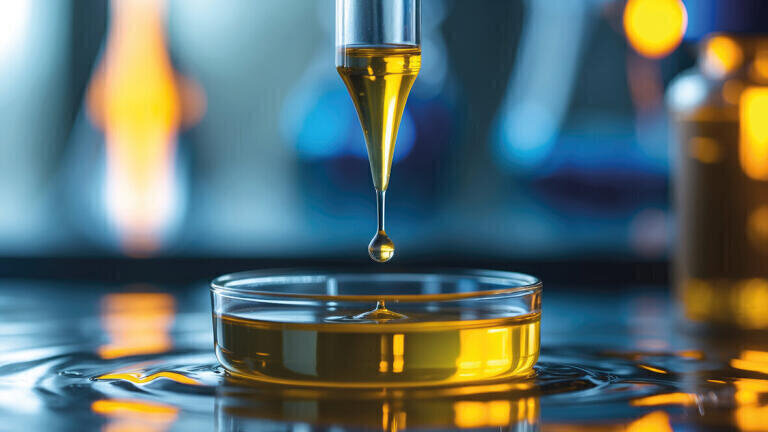
At its core, a lubricant’s purpose is simple: reduce friction and wear between moving surfaces. It forms a protective film that prevents direct metal-to-metal contact, lowers operating temperatures, resists corrosion, and helps flush out contaminants. This basic role hasn’t changed for centuries, but how lubricants achieve it has evolved remarkably (Figure 1).
Modern lubricants are the result of complex formulation engineering, balancing base oils, thickeners and performance additives for desired performance. Lubricants, oil-based, are formulated from base oils and additives. The grease-based counterparts have thickeners, in addition to base oil and additives. Base oils typically make up 70–90% of a lubricant and determine its fundamental properties, such as viscosity and thermal stability. According to the American Petroleum Institute (API), base oils are categorized into five groups Group I (mineral oils) to Group V (esters, synthetics). Additives, which typically account for 10–25% of the formulation, enhance or modify base oil performance to meet specific requirements. Common additive categories include anti-wear agents, detergents, dispersants, antioxidants, viscosity index improvers and friction modifiers. Additives can be categorized as surface-active and bulk-active depending on their interaction (Table 1)
Such lubricants are designed not only for compatibility with materials and operating conditions but also to meet regulatory, environmental and sustainability standards. With greater complexity comes a greater need for reliable, repeatable testing.
Tribological testing provides quantifiable insights into how a lubricant performs under various conditions in terms of friction, load, motion, and temperature. Among the different standardized tests, four ball is considered the workhorse of any lubricant lab. Four ball test can be conducted over a wide range of conditions with loads from 5 to 1000 kg, speeds from 10’s of rpm to 1000’s of rpm, elevated temperatures and additional modules (e.g., KRL) to investigate the entire Stribeck curve and understand impact of base oil and additives on different performance metrics (Figure 2).
Four-ball testing remains one of the most widely used methods for assessing lubricants. Its ability to replicate severe point-contact conditions makes it indispensable for evaluating load-carrying capacity, wear resistance, and friction behaviour for all lubricants. This article provides a structured overview – from lubricant fundamentals to understanding four ball test methods and using such methods to interpret lubricant performance.
Four Ball Tester (FBT) was first introduced in 1933 by Gerrit Daniel Boerlage for the purpose of studying the behavior of lubricants under extreme pressure. As its name suggests, the tribometer is built around four steel balls that are the specimens used for testing the lubricants. Since its invention almost 90 years ago, the basic design and principle of operation have not changed. Three balls, stationary, are clamped inside a lubricant cup, filled with the lubricant under investigation (Figure 3a). The fourth ball is clamped in a holder (chuck or collet), loaded against the bottom balls and rotated at high speed, according under prescribed test protocols. The instrument is at the heart of numerous standards that have been developed across organizations such as ASTM, CEC, DIN, ISO and IP. A representative setup in a modern day four ball tester is shown in Figure 3b.
The arrangement forms a self-aligning tetrahedron offering a simple and repeatable contact configuration (Figure 4)
In the early days, friction was measured by means of a pivoted arm with a counterweight and a pointer connected to a pen, that would draw a friction graph on a rotating drum (Figure 5a). Today’s advanced systems use precision sensors with patented technologies (Figure 5b) that offer accurate lubricant friction at the extremes, i.e., coefficient of friction, CoF as low as 0.03 (at loads as low as 5 kg) to CoF as high as 0.5 (at loads as high as 1000 kg). Such innovations (Ref. 1) help in accurately testing modern engineered lubricants that aim to achieve low friction over the entire Stribeck regime.
The contact between the rotating ball and the three stationary balls simulates sliding contact between lubricated surfaces. There are different categories of tests depending on the objective:
Four ball is widely used within the lubricant industry in the early stages of formulation and development, benchmarking against similar lubricant categories and also quality assurance at production scale. (Table 2)
Though the four ball test does not perfectly mimic every industrial system, it provides a standardized way to compare lubricants and detect changes in formulation or contamination. While other tribological methods exist, the four-ball test remains uniquely useful for benchmarking greases and oils against industry norms.
Let’s examine two most widely used test methods viz., wear preventive (WP) such as those described in ASTM D2266 (grease), ASTM D4172 (oils) and extreme pressure (EP) tests according to ASTM D2783 (oil), ASTM D2596 (grease). Table 4 summarizes and compares WP vs. EP test.
The best lubricant based on the additive chemistry and concentration provides the lowest friction, lowest temperature change, lowest wear and the highest last non-seizure load and weld load.
A mineral oil with two different additives, ZDDP-10% and Polysulfide-10% were mixed separately and tested as per ASTM D2783 to evaluate extreme pressure properties. The results are summarized in Figure 6. Polysulfide exhibits better EP properties with ~250% enhancement in the load wear index, last non-seizure load and weld load compared to ZDDP. Read the full article here (Ref.2)
In this study, two oil formulations with lower viscosities of 5.5 cSt were used, Oil A having anti-wear additives to naphthenic base oil and Oil B having anti-wear additives to paraffinic base oil. These were tested using ASTM D5183 method with a run-in phase followed by a test phase with increasing load till incipient seizure. Oil B exhibited the best overall performance in terms of lower friction coefficient, better temperature stability, higher incipient seizure load and smaller mean wear scar diameter (Figure 7a, 7b). Read the full article here (Ref. 3)
Four-Ball testing continues to be still relevant for modern energy efficient and durable lubricants. Advances in technology such as high precision friction force measurements, more responsive temperature sensors provide more accurate measurements into material-lubricant interactions Whether testing wear resistance, extreme pressure tolerance, or both, the method guarantees clear and standardized data to guide decisions in formulation, quality control and product benchmarking.
Ref. 1 - https://blog.ducom.com/fbt-3/history
Ref. 2 - https://blog.ducom.com/additiveperformance
Ref. 3 - https://blog.ducom.com/compressor-oils
Ref. 4 - https://www.petro-online.com/article/analytical-instrumentation/11/ducom-instruments/future-trends-in-fuels-and-lubricants-testing-prepare-for-the-challenges/3545


 Product directory