Preparative
Preparative reversed-phase liquid chromatography (RP-LC) is an essential purification technique in the manufacturing of peptides and other pharmaceutical compounds. However, it is also associated with considerable solvent consumption, long processing times and high operational costs. As production demands increase, improving the efficiency and sustainability of purification processes has become an important focus in process development.
While parameters such as flow rate, loading capacity and particle size are commonly considered during method optimisation, the selection of the stationary phase can have a particularly significant impact on overall process productivity.
Chromatographic selectivity directly influences recovery, loading capacity, fraction volume and the number of purification cycles required. Even relatively small differences in separation performance can therefore have considerable economic consequences when transferred to production scale.
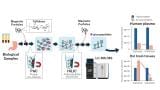
A case study presented in YMC's whitepaper "Optimising Productivity in Preparative RP Purification" illustrates this relationship using the purification of insulin.
Different C8 stationary phases were evaluated to identify the most suitable material in terms of selectivity, recovery and process efficiency. Based on the experimental results, a production scenario for the purification of 100 kg insulin was calculated.
The comparison showed that YMC-Triart Prep Bio200 C8 enabled purification costs to be reduced by up to 40% compared to the evaluated conventional C8 materials. The improvements resulted from several factors, including higher recovery, reduced solvent consumption, shorter production campaigns and extended column lifetime.
In a separate insulin purification study, the same stationary phase also demonstrated more than twice the loading capacity of a conventional C8 material while maintaining the same product purity.
Beyond chromatographic selectivity, stationary phase stability is another important factor affecting manufacturing efficiency.
During repeated purification cycles, stationary phases are exposed to mechanical stress and demanding chemical conditions. Particle degradation, ligand loss and fouling can negatively affect separation performance and lead to additional maintenance or column repacking.
Hybrid silica-based stationary phases offer improved mechanical and chemical stability compared to conventional silica materials. Their extended pH stability also allows alkaline cleaning-in-place (CIP) procedures, which can contribute to longer column lifetimes and more consistent process performance.
Solvent consumption represents a substantial contribution to both operating costs and the environmental impact of preparative RP chromatography.
Besides optimising chromatographic performance, approaches such as alternative organic modifiers, reduced use of trifluoroacetic acid (TFA) and fully aqueous RP conditions can contribute to more sustainable purification processes.
Continuous chromatography provides another opportunity to improve productivity by increasing column utilisation and enabling the recycling of product-containing side fractions.
Improving productivity in preparative RP chromatography requires consideration of the entire purification process rather than individual chromatographic parameters.
YMC's whitepaper "Optimising Productivity in Preparative RP Purification – Modern Strategies to Improve Efficiency, Robustness and Sustainability" discusses these aspects in more detail, including experimental data, an insulin purification case study and approaches to improving long-term process efficiency.
 Product directory