Preparative
Published over 14 years ago. See the latest and most current information on Preparative.
Thermo Fisher Scientific is pleased to announce a technical note describing procedures and practices that help chromatographers get the most out of their capillary ion-chromatography system. Technical Note 113: Practical Guidance for Using Capillary Anion Chromatography presents tips and techniques that will help ensure that good chromatographic results are obtained as system volumes are reduced for capillary IC.
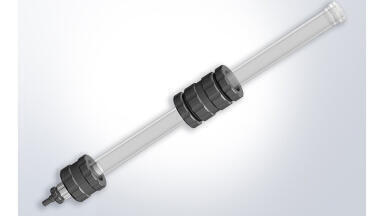
Capillary ion chromatography (IC), which separates ions using 0.4 mm diameter columns at 10–30 μL/min flow rates, provides increased mass sensitivity, reduces water consumption, and reduces waste generation to only ~5 L per year. The increased mass sensitivity is ideal for samples of limited amount and for trace analysis. To achieve these benefits, some additional care is required to maintain flat ends on tubing, to prevent gaps between tubing and connectors, and to prevent air bubbles from being trapped in the capillary system. TN 113 describes techniques for plumbing and flushing the system, and procedures for performing trace analyses, including direct large loop injections and concentrator column installation and loading.
This technical note and many others can be found at www.thermoscientific.com/dionex under the Documents tab.



 Product directory