Preparative
Published over 13 years ago. See the latest and most current information on Preparative.
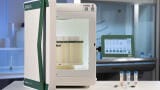
Thermo Fisher Scientific is pleased to announce a new technical note on the rapid separation and quantification of a pharmaceutical counter ion using increased flow rates on our high-pressure capillary Ion Chromatography system, the Thermo Scientific Dionex ICS-5000+ HPIC system. Technical Note 120: Fast Separations of Counter Ions in an Allergy Drug Tablet Using High-Pressure IC demonstrates the importance of counter ion determinations in order to confirm the correct stoichiometry and formula weight of a drug, and, also to test for drug impurities.
With the upgrade to high pressure, capillary systems can operate at system pressures up to 5000 psi. This advance in technology allows 2X to 3X the µL/min flow rates with all the same advantages as standard pressure capillary IC, resulting in low consumption of water (30 to 40 mL/d of water) and low waste generation. Capillary IC systems can remain on 24/7 with minimal resource consumption which translates into a system which has greater ease-of-use, a longer lasting eluent generator cartridge and a far more inexpensive cost of ownership associated with it.
This technical note and many others can be found at www.thermoscientific.com/dionex under the Documents tab.



 Product directory