GC, MDGC
Draft EU maximum levels for mineral oil aromatic hydrocarbons in food are set to apply from Friday, 1 January 2027, subject to formal adoption. Many sit at or close to the limit of quantification, putting clean-up, integration and GC×GC confirmation at the centre of compliance.
The European Commission’s draft regulation would set legally binding maximum levels for mineral oil aromatic hydrocarbons (MOAH) across a wide range of foods. It amends Regulation (EU) 2023/915 on contaminants in food.
The Commission forwarded the text, document D115270/02, to the Council of the European Union under cover note 12131/26, dated Thursday, 23 July 2026. The draft states that it applies from 1 January 2027 and enters into force on the 20th day after publication in the Official Journal.
At the time of writing, adoption and publication had not been confirmed. Norway’s official European Economic Area (EEA) legislation database lists the act as a draft. It records that the text went to the European Parliament and Council for scrutiny on Thursday, 13 August 2026.
Laboratories therefore face a short window. If the text is adopted as drafted, the first levels take effect in around five weeks.
The analyte is defined as “Mineral Oil Aromatic Hydrocarbons (≥C10 to ≤C50)”. That is the carbon range already integrated by online liquid chromatography–gas chromatography with flame ionisation detection (LC-GC-FID).
For many foods the limits are tied to fat or oil content. Cereal products, dairy products other than milk and infant formulae carry 0.50 mg/kg below 4 per cent fat and 1.0 mg/kg at 4–50 per cent. Where a third tier is listed, it is 2.0 mg/kg above 50 per cent. Milk, pulses and cereal grains are set at 0.50 mg/kg; tree nuts, oilseeds and cocoa mass at 2.0 mg/kg.
Several categories are phased. Groundnut, sesame and coconut oils start at 6.0 mg/kg on 1 January 2027. They fall to 4.0 mg/kg on Saturday, 1 January 2028 and 2.0 mg/kg on Tuesday, 1 January 2030.
Three further groups start at 10.0 mg/kg on 1 January 2027 and fall to 5.0 mg/kg on 1 January 2030. They are fish, marine organism and algae oils; spices and dried herbs; and food supplements. Processed and compound foods acquire their own fat-based levels from the same 2030 date.
A new Article 3(4) handles calculated levels for processed foods. Until Monday, 31 December 2029, a calculated MOAH maximum level below the limit of quantification (LOQ) is raised. Depending on fat content, it becomes 0.50, 1.0 or 2.0 mg/kg.
Dry tea and herbal infusions receive no calculated level unless they are used as an ingredient. Foods lawfully placed on the market before the relevant date may remain on sale until their minimum durability or use-by date.
The recitals explain the logic. Where possible, maximum levels are set at the LOQ, with higher levels and reduction timelines where that is not yet achievable. The draft cites the 2023 update of the European Food Safety Authority (EFSA) risk assessment.
Analytical requirements sit in a separate draft implementing regulation amending Regulation (EC) No 333/2007 on sampling and analysis, document D115271/02. Norway’s EEA database records that it was approved in committee on Thursday, 11 June 2026 but not yet adopted.
A draft annex (revision 6), published on a national consultation portal, sets performance criteria for total mineral oil saturated hydrocarbons (MOSH) and total MOAH. It requires an LOQ of no more than 0.50, 1.0 or 2.0 mg/kg according to fat content. For spices, dried herbs, food supplements, essential oils and fishery or algae oils the ceiling is 5.0 mg/kg.
The 5.0 mg/kg figure matters. On the draft numbers, the 2030 MOAH limit for spices and supplements equals the maximum permitted LOQ. Quantifying reliably at the limit in those matrices will be demanding.
The same draft annex accepts recovery of 70–120 per cent, with lower recovery allowed where MOAH is prepared by epoxidation. Reproducibility must not exceed 20 per cent relative standard deviation, except where endogenous interferences intervene.
On specificity, it states that characterisation of interferences, where needed, “shall be done on the basis of comprehensive gas chromatography (GC×GC)”.
The Joint Research Centre (JRC) guidance on mineral oil hydrocarbon monitoring, second edition, 2023, describes LC-GC-FID as the method of choice for routine quantification. Online coupling is favoured for reproducibility and lower contamination risk.
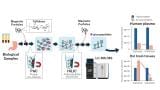
In that set-up, a silica HPLC column separates the MOSH and MOAH fractions before transfer to the GC. The MOAH hump is integrated from the start of the n-C10 peak to the end of the n-C50 peak.
Internal standards anchor quantification. The guidance names cyclohexylcyclohexane for MOSH and 1- or 2-methylnaphthalene for MOAH, with verification standards to check fractionation and volatile losses.
Its LOQ targets match the fat-based tiers in the draft regulation: 0.5, 1.0 and 2.0 mg/kg. The guidance asks for a signal-to-noise ratio above 10 at the apex of the hump at the spiking level.
Olefins such as squalene and sterenes co-elute with MOAH and can inflate results. The JRC guidance identifies epoxidation as the best compromise for removing them.
The trade-off is recovery. Depending on the matrix, epoxidation can remove up to 40 per cent of MOAH, which explains the lower recovery tolerance in the draft method criteria.
Aluminium oxide retains natural long-chain n-alkanes in the MOSH fraction. Saponification removes lipids from high-fat samples, while offline silica enrichment can lower the LOQ. Each step adds handling that has to be validated matrix by matrix.
The European Union Reference Laboratory for Processing Contaminants (EURL-PC), based at the DTU National Food Institute, published GC×GC guidance on Tuesday, 18 November 2025. It sets out how GC×GC fits alongside LC-GC-FID.
It positions LC-GC-FID as the reference method for total MOSH and MOAH. GC×GC is a qualitative complement, needed where interferences prevent confirmation of contamination by LC-GC-FID.
The guidance estimates that 5–10 per cent of contaminated samples in experienced laboratories will need GC×GC characterisation. For such samples, it ties a finding of non-compliance with a maximum level to GC×GC confirmation of mineral oil markers.
Those markers include n-alkane series without odd or even predominance, pristane and phytane, hopanes and steranes. Common interferences include polyolefin oligomers, polyalpha olefins, resin hydrocarbons, terpenes, squalene and carotenes.
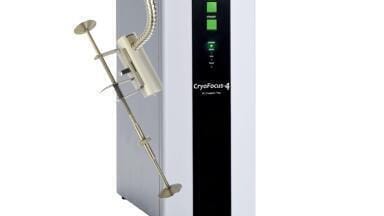
The recommended column set is mid-polar in the first dimension and non-polar in the second, with cryogenic modulation of 5–10 s. On-column or programmed temperature vaporising injection limits discrimination by volatility.
MOAH are grouped into one-ring, two-ring and three-or-more-ring classes. FID gives near-uniform response, while time-of-flight mass spectrometry (ToF-MS) supports tentative identification but not quantification.
Two cautions stand out. Thiophenes cannot be separated from other MOAH by FID alone. Epoxidation can also deplete three-or-more-ring MOAH and thiophenes, so the guidance advises pre-treatment only when strictly necessary.
For control and contract laboratories, the draft levels shift the emphasis from monitoring to defensible enforcement data. Matrix-specific validation at 0.50 mg/kg and above, documented clean-up choices and access to GC×GC confirmation become routine requirements.
The hardest cases are spices, food supplements and marine oils, where limits start high but halve by 2030. Laboratories that can show stable recovery and reproducibility there, near 5.0 mg/kg, will be best placed as the phased levels tighten.
 Product directory