Quantitative analysis processes were used in an investigation to find biomarkers that were distinct to alcoholic fatty liver disease (AFL).
In a study published by the Journal of Biomedical Science and undertaken by a team across Taiwan, scientists compared samples of AFL to healthy controls, non-alcoholic fatty liver (NAFL) and liver fibrosis in a rodent model, in order to search for serological biomarkers.
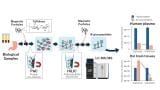
Serum samples derived from animals with AFL, NAFL, or liver fibrosis were identified and compared using quantitative analysis processes including two-dimensional differential gel electrophoresis and mass spectrometry.
Flexible multi-analyte profiling was then used measure the expressions of the putative biomarkers found in the serum of animals and clinical patients.
Eight putative biomarkers were identified and upregulated C-reactive protein (CRP) was found to be significantly higher in AFL compared to all other samples.
As the study was conducted on rats, the scientists concluded that the results identify CRP as a candidate biomarker that requires more study.





 Product directory