Water/wastewater
Published over 12 years ago. See the latest and most current information on Water/wastewater.
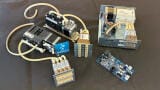
There is a growing need for low cost, remote sensing systems which can be deployed in situ in sufficiently large numbers to ensure that data on key water quality parameters is readily available. Microfluidic technology has great potential as a solution to the increasing demand for environmental monitoring, by producing autonomous chemical sensing platforms at a price level that creates a significant impact on the existing market. Our approach is to combine microfluidics with simplified colorimetric chemical assays; low cost LED/photodiode-based optical detection systems; and wireless communications. In order to drive down the cost of these devices, it is vital to keep the fluidic handling requirement as simple as possible, as complex multistage methods are expensive to implement as well as being less reliable in long-term deployments.
The Grand Challenge
Monitoring and protecting the quality of our environmental waters is of major concern today. Our ability to effectively monitor the aquatic environment at remote locations is essential due to the increasing pressure on water resources from pollution, global climate change and growing demand. Environmental chemical sensors with microfluidics playing a key role have great potential as a solution to the increasing demand for environmental monitoring [1]. Subsequently, the data generated could be provided to all bodies of interest, be it monitoring agencies, local authorities or the general public, providing the much needed information for policy implications.
Presently, the challenges facing this ideal of in situ environmental monitoring are the multi-disciplinary approaches needed involving environmental science, engineering and material science. The cost of these platforms and the inability to “deploy and forget” due to limited long term stability and automated platform maintenance requirements are also major issues that inhibit this model [2] and has recently been described as the “Grand Challenge” posed for analytical scientists [3].
Approaches to water quality monitoring of nutrient levels like nitrate and ammonia have been the subject of much research over many years. However these well-established laboratory methods are making little progression into practical adoption for autonomous field based instruments. Cost is a major factor of this, mainly due to the need to incorporate expensive fluidic handling components, like pumps and valves.
Autonomous environmental sensors will offer a scalable model, measuring much more frequently at denser geographical locations and providing new information on the dynamics of chemical processes in natural water systems [4, 5]. The key to this idea of scalability is to produce these sensors as low cost as possible that can function reliable over a long period of time (ideally months -years) while still providing accurate data. The development of a rapid, reliable, robust micro-scale system that could offer an alternative to the issues and challenges raised would be truly revolutionary in terms of the impact on existing market.


 Product directory