
Laboratory products
Published over 16 years ago. See the latest and most current information on Laboratory products.
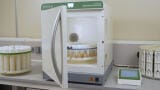
Microbial contamination, caused by bacteria, bacterial spores, viruses, mycetozoa, yeast or other microorganisms, frequently presents a major risk in cell culture experiments. Since this contamination does not necessarily occur together with the overgrowth of the cultivated cell type, it is often detected too late. Changes in host cell morphology and even genetic changes such as chromosomal aberration and translocation, can, for instance, be caused by mycoplasma infection. In extreme cases, a single germ can destroy the work of weeks or months of intricate research effort. In view of the significant progress in the area of sensitive cell culture applications, such as tissue engineering or regenerative cell and tissue therapy, the requirements for CO2-incubators have changed. Highest standards are thus applied to the perfection and reliability of the entire process chain, in which the CO2-incubator occupies a key position, since it must replicate the natural in vivo conditions for optimal cell growth as accurately as possible. Sterile conditions must be guaranteed for in vitro cell cultures throughout the entire cultivation period, since in addition to the risk of spreading contamination the life-threatening danger of infecting patients is ever present.

 Product directory











.jpg)