Preparative
Published over 6 years ago. See the latest and most current information on Preparative.
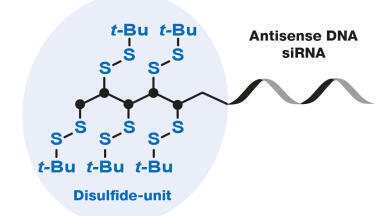
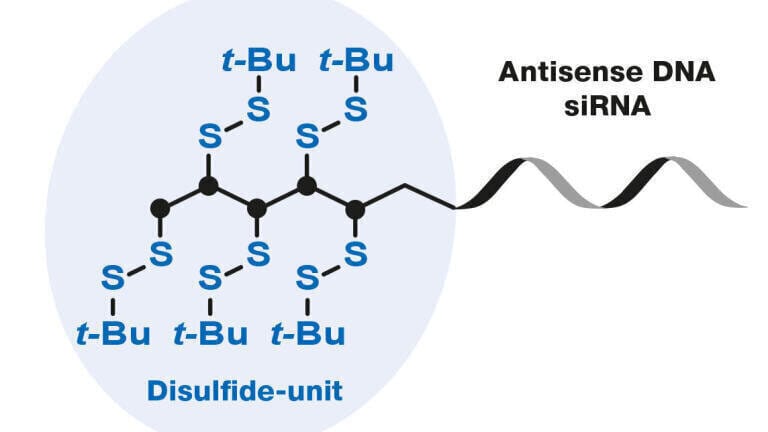
Antisense DNA and siRNA are widely used for gene silencing in research and medical applications. An effective delivery of the oligonucleotides into cells is important for clinical applications. As oligonucleotides are negatively charged the efficiency of the cell membrane permeability is low. Previous methods took several hours to deliver oligonucleotides to cytoplasm. According to Zhaome Shu et al, oligonucleotides modified with low molecular weight disulfide groups at their terminal residues reached the cytoplasm in 10 minutes as a result of disulfide exchange reactions with the thiol groups on cell surface.
Due to the hydrophobic character of the disulfide units, a less hydrophobic stationary phase is necessary for the analysis of the modified oligonucleotides. Even C18 columns with lower hydrophobicity achieve poor peak shapes. Also, the target disulfide modified oligonucleotides are not completely eluted. In this application good peak shapes are achieved using the less hydrophobic, widepore YMC-Triart Bio C4 column. The disulfide modified oligonucleotides were analysed using 50 mM TEAA buffer/acetonitrile and acetonitrile as eluents at an elevated temperature of 50°C
 Product directory