Preparative
Published over 9 years ago. See the latest and most current information on Preparative.
When patients are prescribed medication by their doctor or a hospital, how can we be sure they are taking that medicine? A recent study carried out by researchers has looked at the problem in relation to patients with high blood pressure — and was reported in the journal Hypertension. They looked at the numbers involved and developed a new method of detecting adherence to blood pressure medications.
You would think that if people take the trouble to see a doctor and get prescribed a medicine that they would take it. But that isn’t always the case and it is a problem that the NHS and researchers are actively addressing.
It is estimated that around half of patients taking medication for chronic problems don’t take their medicines as the doctor ordered. This can cause serious harm to some patients and cause confusion for other patients who might not respond as the doctor thought they would — if they had adhered to the correct medicine regime.
There is also an economic cost to the NHS and ultimately to the taxpayer. Wasted medicines are thought to cost the NHS upwards of £300 million per year — that’s a lot of aspirins. This isn’t a new issue — with non-adherence likely to have been a problem from the dawn of medicine. So, what can be done about it?
The study by the team from Leicester and Manchester universities discovered that up to one in three people taking blood pressure medicines were failing to take the medicine as prescribed. They studied over 1400 people taking hypertensive medications from across the UK, and found that around 30–40% didn’t follow doctor’s orders — with younger patients and females most likely at risk of non-adherence.
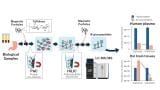
One of the reasons that there has been a lack of progress in addressing the issue has been due to the lack of screening methods to check drug adherence. The team developed a novel and reliable method to assess adherence to antihypertensive medicines — using liquid chromatography – tandem mass spectrometry — in the urine of patients. Of course, chromatography is no stranger to analysing for medicines in blood or urine as discussed in the article, Accelerated Development of Quantitative Assays for Antibody Drug Conjugates.
As noted earlier, non-adherence can affect a patient’s health, and the study found that there was a lack of blood pressure control in at least 50% of the patients in the study. So, when the doctor gives you a prescription — follow their advice. Otherwise, why go to the doctor?




 Product directory