Bioanalytical
Published over 14 years ago. See the latest and most current information on Bioanalytical.
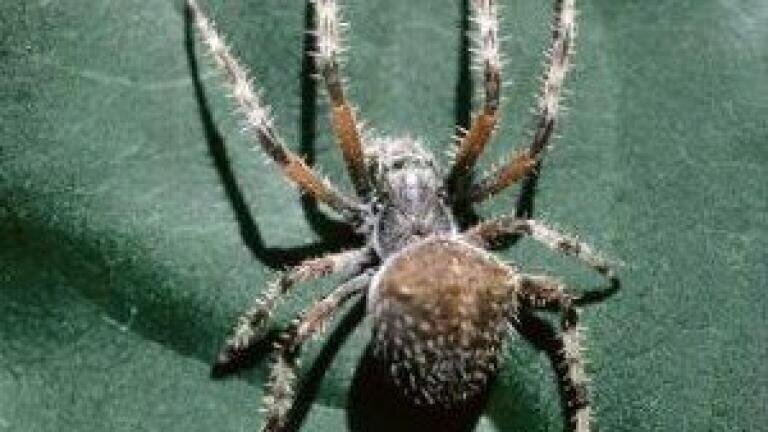
A new discovery has been said to 'revolutionise' conventional thought on the low thermal conductivity of biological materials, after researchers found that spider silk conducts heat better than other organic tissues.
Xinwei Wang, an associate professor of mechanical engineering at Iowa State University, has discovered that at 416 watts per metre Kelvin spider silk has better conductivity than silicon, aluminium and pure iron as well as being 800 times more conductive than other organic tissues.
Professor Wang said: “Our discoveries will revolutionize the conventional thought on the low thermal conductivity of biological materials. This is very surprising because spider silk is organic material. For organic material, this is the highest ever. There are only a few materials higher, silver and diamond.”
The reason spider silk has thermal conductivity properties is because it is a defect-free molecular structure.
It includes proteins that contain nanocrystals and the spring-shaped structures connecting the proteins, according to Wang. Spider silk conducts heat 1,000 times better than silkworm silk, which opens the door for soft materials to add an additional option for thermal conductivity tuning.
Posted by Neil Clark




 Product directory