Experts have used
liquid chromatography mass spectrometry (LC-MS) identify the specific proteins involved in the mechanisms of mucin secretion, in a bid to address the problems faced by those with chronic bronchitis, asthma, and cystic fibrosis.
Excess mucus in the airways leads to obstruction in these conditions, and it is with this knowledge that scientists isolated mucin granules and granule membranes from primary cultures of well differentiated human bronchial epithelial cells.
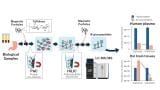
They used a novel technique of immuno-isolation, based on the presence of the calcium activated chloride channel hCLCA1 on the granule membranes, and used Western blotting and co-immunoprecipitation to verify that that MARCKS, HSP70, CSP and hCLCA1 were present on the granule membranes and associated with each other.
After subjecting the isolated granules/membranes to LC-MS to identify other granule associated proteins, they found a number of additional cytoskeletal and regulatory proteins associated with the granules that could play a role in secretion.





 Product directory