Columns (LC)
Published over 6 years ago. See the latest and most current information on Columns (LC).
Testosterone is an important sex hormone for humans and other animals. It is important for both men and women, although there are lower levels circulating in a woman’s body. Although most often associated with sex, testosterone plays other roles in the body too. When the levels start to vary too much, both physical and mental problems can occur – so knowing the patient’s testosterone levels can play an important role in helping a doctor to make an accurate diagnosis of medical problems.
A blood or plasma sample is the usual method used to measure testosterone. But this involves an invasive procedure involving needles. A recent paper published in the Journal of Advanced Pharmaceutical Technology & Research reports on an improved chromatography method that can analyse testosterone in both plasma and saliva – potentially removing the need for an invasive procedure.
Testosterone belongs to a class of hormones known as androgens – also known as anabolic steroids or steroids. In males, testosterone is produced mainly in the testicles and in women in the ovaries. Production of testosterone is controlled by the pituitary gland and the hypothalamus which is in the brain. The hypothalamus tells the pituitary gland how much testosterone is needed, this is then relayed to the testicles that produce the testosterone.
Testosterone is the primary sex hormone in men. Before birth, testosterone plays a role in developing sex organs – with a further release for puberty leading to the development of the penis and testicles and the growth of body hair. Testosterone also plays a major role in the production of sperm and affects our sex drive. Besides its role as a sex hormone, testosterone is also involved in red blood cell production and how our fat supplies are distributed.
Low testosterone can cause various symptoms and conditions. It is known that it decreases with age, but sometimes an injury to a testicle, chemotherapy or radiation can cause testosterone levels to drop. Low testosterone can impact male fertility due to its links with sperm production. Low testosterone in a teenager can also affect puberty or indicate a problem with the pituitary gland.
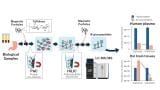
The usual test is a blood test. But work by researchers in Saudi Arabia and published as An improved method for measurement of testosterone in human plasma and saliva by ultra-performance liquid chromatography-tandem mass spectrometry suggest that a saliva test could be just as good and less invasive. The team developed a method for analysing both saliva and plasma samples for testosterone using ultra-performance liquid chromatography-tandem mass spectrometry. Developments in liquid chromatography are discussed in the article, The Theory and Advantages of Solid-Core Particles. The study authors conclude that: A simple, sensitive, specific, and rapid UPLC-MS/MS assay for measuring clinically relevant testosterone level in human plasma and saliva was developed and validated.




 Product directory