Bioanalytical
Published over 5 years ago. See the latest and most current information on Bioanalytical.
Hydrophobic interaction chromatography (HIC) is a standard technique used to analyse monoclonal antibodies (MAbs) and antibody-drug-conjugates (ADCs). The native conditions offer crucial advantages for the analyses of proteins, as they are not destroyed or otherwise affected and can be characterised in their native structure.
The direct coupling of hydrophobic interaction chromatography to mass spectrometry (MS) is highly desirable for further characterisation without the need for an isolation step beforehand. Due to high concentrations of non-volatile salts, which are usually used in HIC mode, a coupling to MS has previously seemed impossible. The use of volatile salts requires an even higher salt concentration to achieve the same salting-out effect.
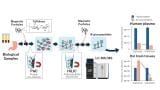
To overcome this obstacle and to enable simultaneous UV and MS detection a post-column makeup flow and a splitter have to be used. The makeup flow decreases the salt concentration while the splitter reduces the flow rate to enable the coupling to MS. A nanospray ionisation mass spectrometer (NSI-MS) was chosen because of its high sensitivity and salt tolerance.
YMC recently released two new application notes. One demonstrates the determination of the DAR of the Sigma MAb ADC-mimic, while the other one shows how a mixture of seven in-house MAbs as well as the molecular variants of two MAbs can be characterised via HIC-MS.
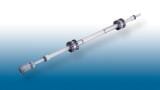
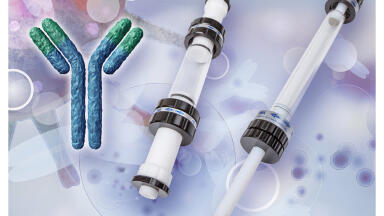
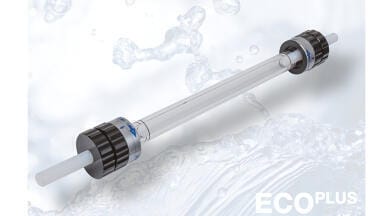
While 3 M ammonium acetate in water is used as eluent A in both application notes, a mixture of 2-propanol and water is used for the analysis of the ADC-mimic and 100% was applied to separate the antibodies as eluent B. Also, different gradients were applied using YMC’s BioPro HIC BF column in both methods. BioPro HIC BF columns are based on a non-porous butyl functionalised polymer particle with 4 µm and guarantee highly reliable results due to their excellent lot-to-lot reproducibility.




 Product directory