Porcine reproductive and respiratory syndrome virus (PRRSV) may be affected by individual
biologically active substances that occur within its cellular structure, according to researchers.
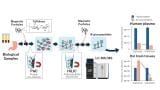
Studies at Sun Yat-sen University, Guangdong Academy of Agricultural Sciences and South China Agricultural University, all located in Guangzhou, looked at the cellular proteins associated with the membranes of the PRRSV virions.
Gel electrophoresis and mass spectrometry were used to identify a total of 61 proteins, classified into eight categories according to function.
Among the classifications were cytoskeletal proteins, macromolecular biosynthesis, chaperones, metabolism-associated proteins and membrane binders dependent on calcium.
Based on their analysis of the
biologically active substances, the scientists claim to have demonstrated how cellular proteins are incorporated into PRRSV virions, leading to potential pathways for further investigation of replication, assembly and pathogenesis of the virus.
The research is published in Virology Journal, an open-access periodical which accepts studies on all aspects of the discipline.




 Product directory