Scientists have discovered that
biologically active substances use a greater array of processes driven by metals than had previously been believed.
Metals help to drive a number of basic processes that allow microbial organisms to survive.
They include DNA repair, respiration and photosynthesis, according to the team from the US Department of Energy's Lawrence Berkeley National Laboratory.
However, their research using inductively coupled plasma mass spectrometry has now found that the perceptions were the equivalent of assessing today's world using a 15th-century map.
"We thought we knew most of the metalloproteins out there," says John Tainer of the laboratory's life sciences division.
"But it turns out we only know a tiny fraction of them."
The research is published in the latest issue of Nature, where the scientists explain how their procedure represents a shift from the previously accepted methodology for such studies.
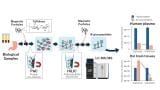
Rather than adopting a protein-based analysis, the use of high-throughput tandem mass spectrometry and
liquid chromatography allowed for metal-based purification.




 Product directory