Analysis of
biologically active substances present in mice sarcoma has revealed possible routes for future research into tumour therapies.
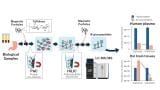
Writing in the Journal of Experimental & Clinical Cancer Research, scientists explain that they used chromatography to extract a mixture of heat shock protein-peptides (mHSP/Ps) from mice sarcoma cells.
The research, conducted at the General Hospital of the People's Liberation Army Institute of Orthopedic Research in Beijing, China, examined how these biologically active substances can trigger immune responses - both innate and adaptive.
In particular, mice vaccinated using an enhanced mHSP/P vaccine showed an 82.3 per cent tumour growth inhibition rate at 30 days.
Regression of tumour growth was seen in 80 per cent of the mice, with enhanced long-term survival as a result, offering a "promising therapeutic agent" for use in further future testing.
The journal says its aim is to provide an outlet for the latest findings from oncology research conducted around the world.





 Product directory