LC-MS
Published over 7 years ago. See the latest and most current information on LC-MS.
Knowing what is in the food and drink we consume is increasingly important to consumers - particularly as we become more aware of the effects of additives and by-products of production. Wine is no different, consumers are buying more organic wine as sales are increasing, so it is important to know what is in the wine we drink. And the first place to start for wine is - the grapes used to produce the wine?
Grapes are grown in all areas of the world - barring perhaps the ice-caps. Over 75 million tonnes of grapes are grown worldwide every year. Turkey produces around 4 million tonnes of grapes per annum - making it the sixth largest grape produce in the world behind Italy (the largest with over 8 million tonnes), France and the USA.
It is perhaps a bit of a paradox that despite being a prolific grape producer, very little of Turkey’s population drinks wine, although the numbers are increasing. But, Turkey has an ideal climate for grape cultivation, with its geographical size and climate variations allowing a wide variety of grapes to be grown. It is estimated that there between 600-1200 different varieties of European grapevines under cultivation - but only 60 of these are grown commercially in Turkey.
A recent article published in the Journal of Natural and Applied Sciences reports on a study carried out on the pesticide levels in grapes grown in Turkey - Determination of Pesticide Residues in Grapes From Vineyards Implemented Good Agricultural Practice in UÅŸak. The team collected grape samples from over 50 different vineyards across the Usak province in Turkey.
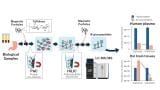
After extracting the samples using QuEChERS method, the samples were analysed by both gas and liquid chromatography coupled with tandem mass spectrometry (GC-MS/MS and HPLC-MS/MS). The use of liquid chromatography and tandem mass spectrometry to analyse samples is discussed in the article, Sensitive and Robust Screening of Hundreds of PPCP Compounds Using Online SPE-LC-MS/MS.
The study found that the most detected pesticide was spinosad - a naturally occurring bacterial insecticide that was granted organic status in the USA in 2003. Spinosad is used to control caterpillars and thrips, but is also found in dog’s flea treatments and can be used to treat human head lice. But importantly, none of the grapes samples contained a pesticide above the maximum residue limits.
So, raise a glass to Turkish wine.

 Product directory