HPLC, UHPLC
Published over 4 years ago. See the latest and most current information on HPLC, UHPLC.
Cyclic peptides are characterised by polypeptide chains that are arranged in a cyclic ring structure. This structure offers various advantages over their linear counterparts: on the one hand cyclic peptides show a higher thermal stability and a higher resistance to digestion. On the other hand, their rigid structure results in a better biological activity since the binding to the target molecule is improved. All these characteristics turn them into highly valuable drug candidates.
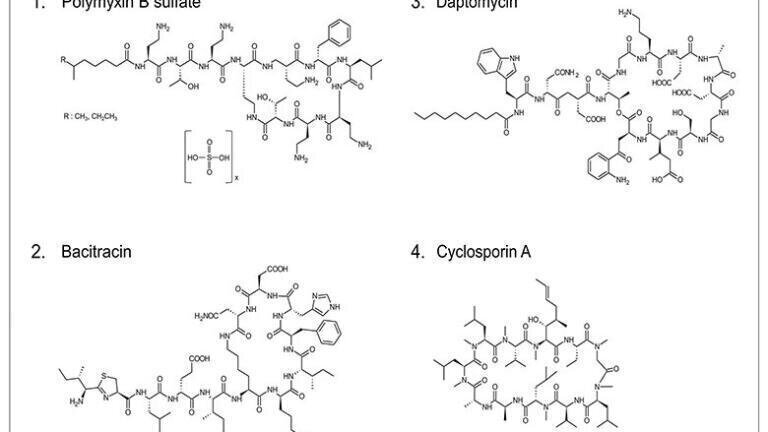
Cyclic peptides have various applications; the peptides in this application note, polymyxin B sulphate, daptomycin and bacitracin are used as antibiotics for the treatment of bacterial infections, whereas cyclosporin A is used as an immunosuppressive agent. Other cyclic peptides can also have antifungal or antitumor functionalities.
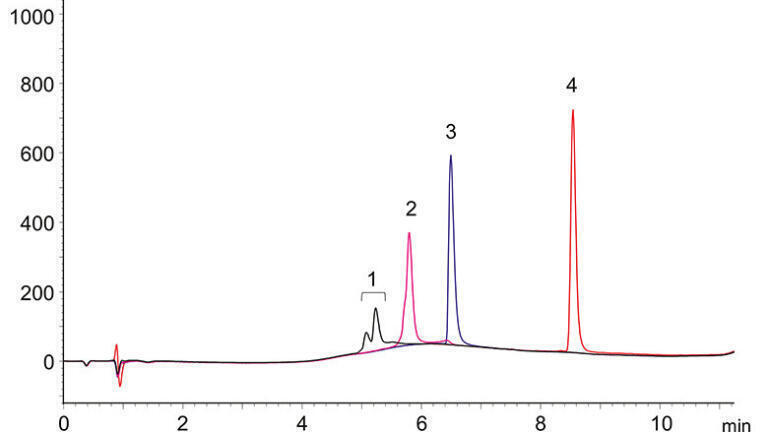
In this application note, the UHPLC analysis of four cyclic peptides is shown. Based on the hydrophobicity of the peptides, a YMC-Triart Bio C4 column was chosen for this application. Since a relatively high concentration of acetonitrile is needed for elution, a C4 modification is a good choice since it provides more acceptable retention times. Since a temperature of 70°C is required, YMC-Triart Bio C4 is a better column choice due to its high temperature stability. Sharp peaks are obtained with a mobile phase containing formic acid, which is commonly used for LC/MS analysis. YMC-Triart Bio C4 shows high sensitivity using these LC/MS compatible conditions.




 Product directory