Gas chromatography-mass spectrometry (GC-MS) has been used by researchers during a new study to identify potential biomarkers for childhood obesity.
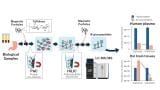
Scientists from the Central South University and Yulin Normal College in China took plasma from test subjects that were normal weight, overweight and obese and used GC-MS to profile the samples.
GC-MS techniques allow industry experts to separate and identify the components of certain substances and may be applied to a range of analyses such as drug detection and explosives investigation.
Published in the Journal of Pharmaceutical and Biomedical Analysis, the experiment showed metabolic patterns across the three groups were different.
The authors stated: "Several metabolites, say isoleucine, glyceric acid, serine, 2,3,4-trihydroxybutyric acid and phenylalanine were screened as potential biomarkers of childhood obesity."
According to the report, these were closely linked with factors such as waist–hip ratio, total cholesterol and total triglycerides in those with weight problems.
This means the "metabolic fingerprinting" approach can be an important tool for revealing childhood obesity biomarkers, it added.


 Product directory













.jpg)

.jpg)
.jpg)