Electrophoretic separations
Published over 14 years ago. See the latest and most current information on Electrophoretic separations.
Scientists at the French National Centre of Scientific Research's Laboratory for Analysis and Architecture of Systems (LAAS-CNRS) have postulated that replacing electrophoresis with pressure-driven flow could be more effective for separating DNA strands, according to Seperations Now.
According to the research, pumping the strands through nanopillar arrays by pressure allows for cleaner separations than those generated by electrophoresis. This overcomes electrophoresis limitations such as separating larger DNA strands and the separation of strands at small scales, such as those found on lab-on-a-chip devices.
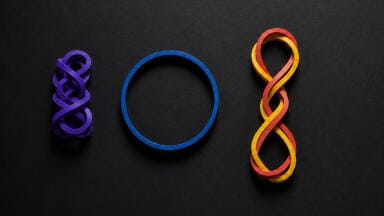
The discovery showed that using single molecule fluorescence microscopy to monitor DNA migration through a nanopillar array made the DNA strands adopt unique configurations, judging by how they are propelled.
They also found that when propelled by electrophoresis, the strands were pulled off the nanopillars around four times faster than when propelled by pressure. The scientists separated two large DNA strands in only two minutes in testing, which compares to over an hour for conventional gel electrophoresis.
Posted by Fiona Griffiths



 Product directory