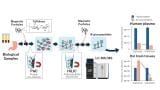
Two-dimensional gel electrophoresis and tandem mass spectrometry (GE-MS) have been applied to the
quantitative analysis of the wheat flour proteome, in order to remove some of the complexity from understanding its structure.
Compiled by scientists at the USDA Agricultural Research Service's Western Regional Research Center, the
quantitative analysis appear in Proteome Science, a periodical focusing on research into all aspects of both structural and functional proteomics.
They explain that a flour sample contains many proteins and, therefore, MS analysis alone has proved difficult in terms of relating each identified spot to a given gene sequence.
Using GE-MS to undertake
quantitative analysis of wheat flour, however, the scientists were able to identify 233 protein spots, equivalent to 93.1 per cent of the normalised volume of their sample.
"The ability to measure expression levels for individual flour protein genes complements information gained from efforts to sequence the wheat genome and is essential for studies of effects of environment on gene expression," the researchers conclude in their report.





 Product directory