Electrophoretic separations
Published over 14 years ago. See the latest and most current information on Electrophoretic separations.
A new fluorescent sensor for food spoilage has been deemed as easy to use as litmus paper, according to researchers, who have developed the cheap device to make a more accurate judgement on food quality.
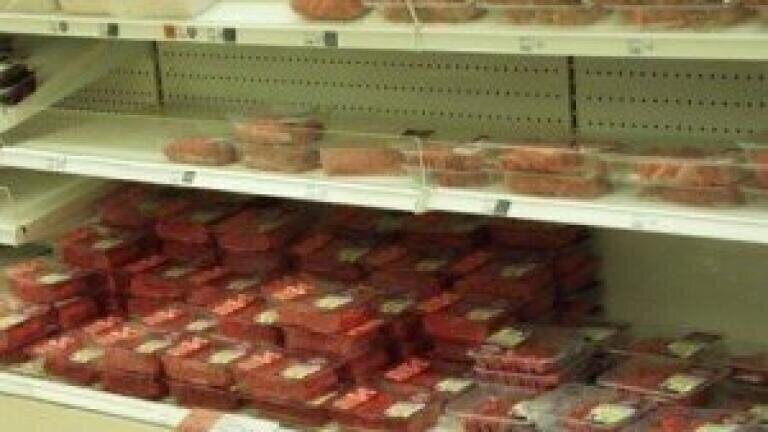
Most food suppliers and food stores rely on 'use-by' dates to check for food spoilage, but these can be severely inaccurate. Use-by stickers work on general calculations, and are often very cautious in their outlook. This means that a lot of food can end up going to waste when it is perfectly suitable to consume, costing money and increasing the amount of wasted produce.
Researchers from Stanford University looked to improve this method by using current fluorescent technology and shaping it so that the testing procedure was generic enough to be used in everyday scenarios. Most food spoilage sensors- such as electronic noses and other fluorescent sensors –involve cumbersome or complicated procedures, which makes them unsuitable for use in real-world applications.
Eric Kool and his team have designed a sensor which could reduce waste and drive down cost. They used sequences of oligodeoxyfluorosides (ODF; fluorophores attached to a DNA backbone), whose fluorescent response upon UV excitation changes colour in the presence of gaseous analytes produced by bacteria or mould.
One very useful addition is that the dyes can be printed on paper using commercial inkjet printers, which increases the ease of use as well as the widespread applicability of litmus paper. Food testing will not be confined to everyday laboratories using the new equipment, and can rather be used to test at the source.
Hyukin Kwon, one of the researchers on the project said: "Different sets of ODF ink solutions – one sensitive to meat spoilage, another sensitive to moulds, etc – can be put in commercial inkjet printer cartridges, and people can print them and put them in containers of desired food products.
"The sensors can also be printed already and sold as testing strips."
Posted by Neil Clark



 Product directory