Columns (LC)
Published over 12 years ago. See the latest and most current information on Columns (LC).
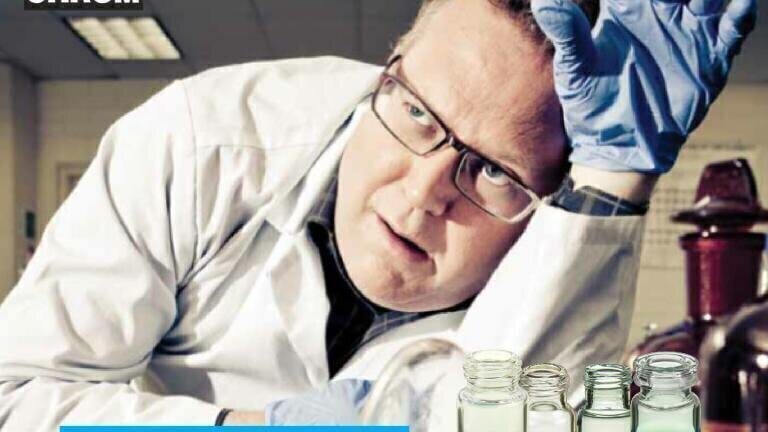
The analysis of low abundance, basic or naturally occurring sensitive compounds presents particular challenges and difficulties for the chromatographer. The surface of even high quality standard glass vials will contain hydroxyl (silanol) groups that will deprotonate in sample diluents (such as water). These deprotonated hydroxyl groups can result in adsorption of basic compounds, changes in sample solution pH and hydrolyzation of susceptible compounds, potentially making some sample components undetectable and quantitation unreliable. Coating or cleaning the glass surface may improve the situation, but does not eliminate it altogether. Reduced Surface Activity (RSA) glass vials from MicroSolv Technology Corporation have been specifically developed for working with low abundance and sensitive analytes. The proprietary manufacturing process used in producing these vials virtually eliminates all silanol (hydroxyl) groups on the glass surface. This in turn minimises any adsorption of analytes to the glass wall, avoiding loss of sample and reducing inconsistent quantitation. RSA vials have ultra-low levels of surface metal ions, making them an ideal choice for sensitive LC-MS/MS as well as GC-MS analyses. For further information on RSA vials, email Hichrom Limited, Tel: 0118 930 3660, or contact MicroSolv.


 Product directory
















.jpg)