Electrophoretic separations
Published over 15 years ago. See the latest and most current information on Electrophoretic separations.
In order to gain a comprehensive understanding of therapeutic Monoclonal Antibody (MAb) function, it is necessary to critically characterize glycosylation associated with them. Carbohydrates, and therefore glycosylation, are known to play an important role in the structure, function, and clearance of MAbs and have been shown to be responsible for invoking immune responses in humans. Changes in carbohydrate composition or concentration can significantly impact the overall efficacy of therapeutic MAbs and can also lead to side effects.
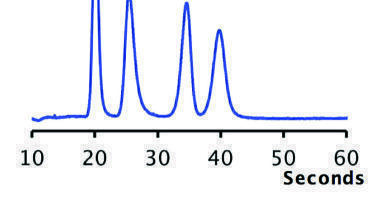
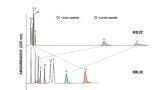
Presence of fucose on monoclonal antibody associated N-linked oligosaccharides is a notable glycan modification and has been linked to a decrease in antibody dependent cellular cytotoxicity (ADCC). Accurate analysis of fucosylated and afucosylated oligosaccharides is therefore critical for a complete understanding of MAb microheterogeneity. Capillary Electrophoresis (CE) technology has been successfully used to separate major IgG N-linked oligosaccharides G0, G1, and G2 structures from one another.
The basis for this separation relies on electrophoresis of oligosaccharides labeled with amino pyrene tri-sulfonic acid (APTS). The complexity of glycans associated with many molecules calls for high resolution separation in order to assess heterogeneity among carbohydrate isomers and co-migrating carbohydrate species. Since CE is already an established technology for automated and quantitative analysis of N-linked oligosaccharides, we set out to develop a methodology by which fucosylated oligosaccharides can be differentiated from afucosylated species. Optimization of chemistry and CE methods enabled separation of fucosylated and non-fucosylated carbohydrates from each another.




 Product directory