Electrophoretic separations
Published over 15 years ago. See the latest and most current information on Electrophoretic separations.
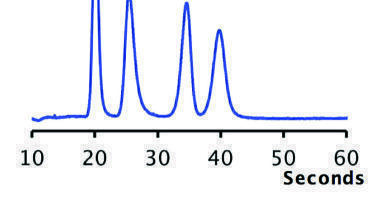
Capillary Electrophoresis (CE) coupled with Mass Spectrometry (MS) has been under investigation for the past couple of decades1. Combining the high separation power of CE with MS promises to yield more sensitive detection and higher information content on the analytes than current methods such as standard UV detection. Since those early days, there have been many improvements and technology advancements on CE and MS instruments, as well as the interfacing devices. Modern Time of Flight (TOF) MS instruments and robust commercial interfaces provide increasingly sensitive routine analysis with accurate mass data.
The basic approach to CE-MS is to use Electrospray Ionization (ESI) techniques. The advantage to this system is that typically ionized or polar compounds separated by the CE under low flow conditions (low nl/min range) can then be efficiently transferred from the liquid phase into gas phase ions required by MS instruments. In addition, ESI does not decompose fragile molecules, like proteins. Routine CE-MS requires the use of volatile
buffers or low concentration salts. This avoids contamination of MS instruments and the suppression of analyte ions by salts competing for entrance to the MS. Separation by CE and ionization of molecules in the ESI source are both based on analyte chemistry and require optimization for best results. It is critical to choose the correct solvents and pH ranges for solubility, to allow for optimal CE mobility and for high ionization efficiency during desolvation. This may call for different chemistries for the separation buffers and for a sheath liquid controlling the ESI processes.


 Product directory